







What's Happening?
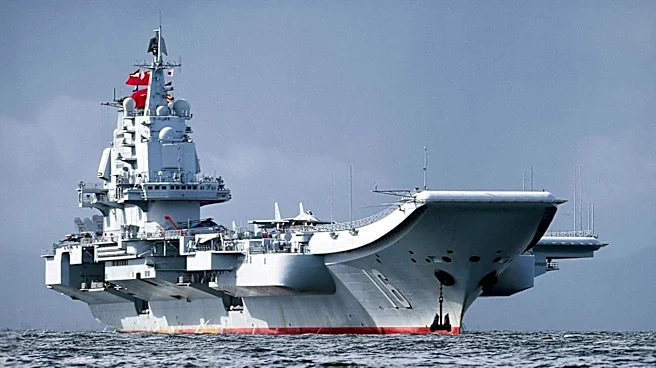
China has successfully conducted take-off and landing operations of its GJ-21 drone from its first Type 076 amphibious assault ship, the Sichuan, according to state media. This achievement marks a significant breakthrough for the Chinese navy, demonstrating
its capability to operate fixed-wing stealth drones from large maritime combat platforms. The Sichuan had previously undergone consecutive sea trials in late October. The GJ-21 is described as the Chinese military's first ship-borne reconnaissance-strike stealth drone, and its successful integration with the Type 076 warship represents a new phase in the development of China's amphibious assault capabilities. The exact location of these operations was not disclosed by state broadcaster CCTV.
Why It's Important?
This development is important as it signifies a notable advancement in China's naval power projection and military technology. The ability to deploy and recover stealth reconnaissance-strike drones from amphibious assault ships enhances the People's Liberation Army's (PLA) operational reach and intelligence-gathering capabilities in maritime environments. For the U.S. and its allies, this could imply a more sophisticated and potent Chinese naval presence, particularly in contested regions like the South China Sea and the Taiwan Strait. The integration of stealth drone technology with amphibious assault platforms could alter strategic calculations, potentially increasing the complexity of naval engagements and requiring adjustments in defense planning and surveillance strategies by other nations in the Indo-Pacific.
What's Next?
The successful deployment of the GJ-21 drone from the Type 076 warship suggests that China will likely continue to integrate advanced unmanned aerial systems into its naval operations. Future developments could include further testing and refinement of these systems, potentially leading to their broader deployment across China's growing fleet of amphibious assault ships. This could also spur other naval powers to accelerate their own research and development into similar ship-borne drone capabilities to maintain a technological edge. The international community, particularly neighboring countries and major naval powers, will likely monitor these advancements closely for their implications on regional security and the balance of power.
Beyond the Headlines
Beyond the immediate military implications, this technological leap by China could have broader effects on global defense industries and strategic doctrines. The successful operation of a stealth reconnaissance-strike drone from an amphibious assault ship highlights a trend towards increasingly autonomous and integrated warfare systems. This could lead to a re-evaluation of traditional naval warfare strategies, emphasizing the role of unmanned systems in reconnaissance, targeting, and even strike missions. It also raises questions about the ethical and legal frameworks governing the use of autonomous weapons in international conflicts, potentially sparking new debates on arms control and the future of naval combat.