







What's Happening?
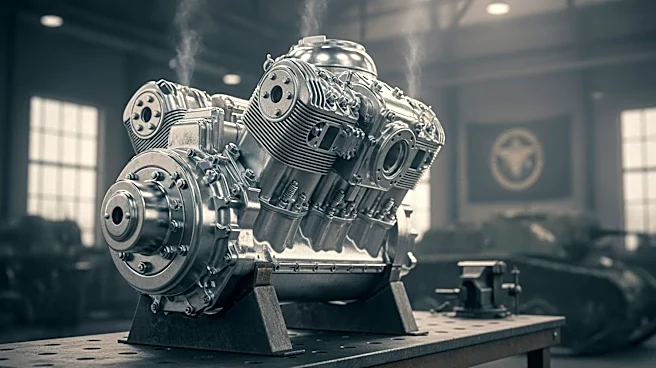
Russia has successfully restored approximately 5,100 Cold War-era tanks by reviving engines previously deemed 'unrecoverable.' This effort, reported by defense analyst David Axe, involved the regeneration of diesel engines for T-72A tanks, a model dating
back to the 1970s. The restoration initiative began in September 2024 when a Russian industry representative announced a new program to refurbish the W-46 diesel engines. This program was initially expected to produce around 100 engines, but subsequent contracts, including one with the Kingisepp Machine Building Plant, expanded the effort to refurbish the W-84 engines, compatible with the T-72A. This comprehensive restoration has left Russia with more tanks than it had before its full-scale invasion of Ukraine in February 2022, although it has depleted its Cold War stockpile.
Why It's Important?
The restoration of these tanks significantly boosts Russia's military capabilities, providing it with a larger armored force than it had at the onset of its conflict with Ukraine. This development could alter the strategic balance in the region, as Russia now possesses a substantial number of operational tanks. However, the depletion of its Cold War stockpile means that Russia may face challenges in quickly regenerating its armored forces in future conflicts. The restored tanks, while upgraded, do not match the capabilities of modern tanks, which could impact their effectiveness in contemporary warfare. This situation underscores the strategic importance of maintaining and modernizing military equipment to ensure readiness and capability in ongoing and future conflicts.
What's Next?
With the restoration of these tanks, Russia may seek to deploy them strategically in its ongoing military operations. However, the limitations of the restored tanks compared to modern standards may necessitate further upgrades or the development of new military strategies. The depletion of the Soviet-era stockpile also suggests that Russia will need to invest in new production or modernization programs to maintain its armored capabilities in the long term. This could lead to increased military spending and a focus on developing more advanced technologies to replace the aging fleet.
Beyond the Headlines
The restoration of these tanks highlights the broader implications of relying on legacy military equipment. While cost-effective in the short term, the long-term sustainability of such an approach is questionable, especially as technological advancements continue to evolve. This situation may prompt other nations to reassess their military strategies and the balance between maintaining older equipment and investing in new technologies. Additionally, the environmental impact of refurbishing and deploying older military hardware could become a point of concern, as nations strive to balance military readiness with environmental responsibilities.