







What's Happening?
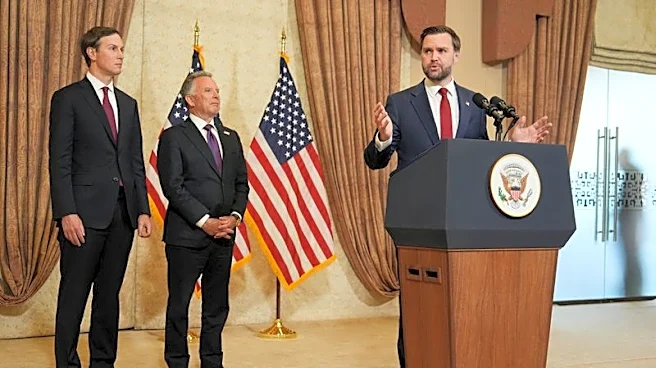
Talks between the United States and Iran in Islamabad ended without an agreement, with both sides blaming each other for the failure. The U.S. accused Iran of not committing to abandon its nuclear program, while Iran criticized the U.S. for excessive
demands. The breakdown leaves a fragile two-week ceasefire in place, with ongoing regional tensions. The U.S. seeks to ensure freedom of navigation in the Strait of Hormuz and dismantle Iran's nuclear infrastructure, while Iran demands control over the waterway and a broader ceasefire.
Why It's Important?
The failure of talks underscores the persistent challenges in U.S.-Iran relations, particularly regarding Iran's nuclear ambitions and regional influence. The situation affects global energy markets, as the Strait of Hormuz is a vital passage for oil shipments. The ongoing tensions could lead to further instability in the Middle East, impacting international security and economic interests.
What's Next?
With talks stalled, the U.S. may continue to apply economic and military pressure on Iran. Regional allies, such as Israel, remain vigilant, with Prime Minister Netanyahu stating that the campaign against Iran is not over. The international community will watch for any escalation or new diplomatic efforts to resolve the impasse.