






What's Happening?
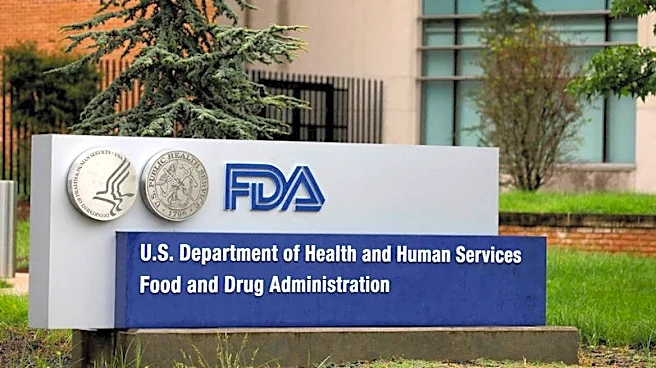
A federal advisory panel to the Food and Drug Administration (FDA) has endorsed Grail Inc.'s Galleri test, a DNA-based blood test designed to detect signs of various cancers in seemingly healthy individuals. The panel voted 7-2, with one abstention, concluding
that the test offers more potential benefits than risks, despite significant questions regarding its efficacy. The Galleri test does not diagnose cancer directly but identifies signals that may indicate the presence of over 50 types of cancer, including those for which no routine screenings currently exist, such as liver and ovarian cancer. Individuals receiving a positive result would require further medical evaluation. This endorsement marks the first time a federal advisory group has supported such an experimental approach to multi-cancer detection. The FDA is expected to make a final decision on the test in the coming months, which could significantly broaden its availability in the U.S.
Why It's Important?
The potential FDA approval of Grail's Galleri test could revolutionize cancer screening in the United States. Currently, recommended cancer screenings, like mammograms and colonoscopies, target one specific type of cancer. This DNA-based test offers the possibility of detecting multiple cancers from a single blood draw, potentially leading to earlier detection for many cancers that currently lack screening options. Earlier detection often correlates with more treatment options and improved survival rates. However, the panel's endorsement comes with caveats, as FDA reviewers highlighted that the test missed two out of three cancers diagnosed over a one-year period in Grail's primary study, potentially giving false reassurance to patients. Consumer advocates also warned that an all-clear from the test might lead patients to delay seeking medical attention for symptoms, which could have fatal consequences. The test is already available for purchase, typically costing $700 or more, but FDA approval would likely pave the way for coverage by Medicare and private insurers, making it more accessible to a wider population.
What's Next?
Following the advisory panel's endorsement, the FDA is anticipated to issue a final decision on Grail's Galleri test within a few months. If approved, this decision could significantly expand the test's availability and adoption across the U.S., potentially leading to its coverage by Medicare and private insurance providers. However, the panel and FDA reviewers have emphasized the need for continued research to fully understand the test's long-term benefits and to address concerns about its accuracy, particularly its potential for false negatives and the risk of patients delaying follow-up care. Healthcare providers and patients will need clear guidance on how to integrate this test into existing screening protocols, as experts stress it should supplement, not replace, current cancer screenings. Further studies will also be crucial to demonstrate if the test ultimately leads to a reduction in cancer deaths, a metric that Grail has not yet provided.
Beyond the Headlines
The endorsement of Grail's DNA-based cancer test highlights a broader shift towards personalized and proactive healthcare, driven by advancements in genomic science. While offering the promise of earlier cancer detection, this development also raises complex ethical and societal questions. The potential for false positives and negatives could lead to increased patient anxiety, unnecessary follow-up procedures, or, conversely, a false sense of security that delays critical diagnoses. The cost of such advanced tests and their eventual coverage by insurance will also impact healthcare equity, potentially creating disparities in access to cutting-edge screening technologies. Furthermore, the integration of multi-cancer detection tests into routine medical practice will necessitate a re-evaluation of current screening guidelines and a robust educational effort for both healthcare providers and the public to ensure informed decision-making and appropriate utilization of this new technology. The long-term impact on public health outcomes and the healthcare system will depend on how these challenges are addressed.