



What's Happening?
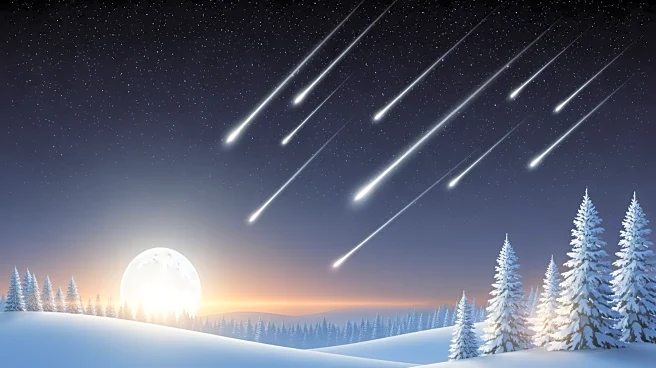
Sky watchers in the Northern Hemisphere are in for a treat as the Ursid meteor shower coincides with the winter solstice this weekend. The Ursids, which are less prominent than the Geminids, will peak on the evening of December 21 and continue through
the early hours of December 22. This meteor shower is named after the constellation Ursa Minor, from which the meteors appear to radiate. The event is further enhanced by a new moon on December 20, ensuring darker skies for optimal viewing. The Ursids typically offer around five to ten meteors per hour, making the timing of this peak crucial for enthusiasts.
Why It's Important?
The alignment of the Ursid meteor shower with the winter solstice and a new moon presents a unique opportunity for astronomers and sky watchers to observe celestial phenomena under ideal conditions. The absence of moonlight will provide a clearer view of the meteors, enhancing the experience for both amateur and professional astronomers. This event also highlights the importance of dark sky preservation, as light pollution can significantly impact the visibility of such natural spectacles. The occurrence of this meteor shower during the longest night of the year adds to its significance, offering an extended period for observation.
What's Next?
As the Ursid meteor shower peaks, enthusiasts are encouraged to find locations with minimal light pollution to fully enjoy the event. Observers should allow their eyes to adjust to the darkness for about 30 minutes to maximize their viewing experience. The event serves as a reminder of the ongoing need to address light pollution issues, which can hinder the observation of such celestial events. Additionally, this alignment may inspire further interest in astronomy and the natural sciences, potentially leading to increased public engagement and educational opportunities in these fields.