


What's Happening?
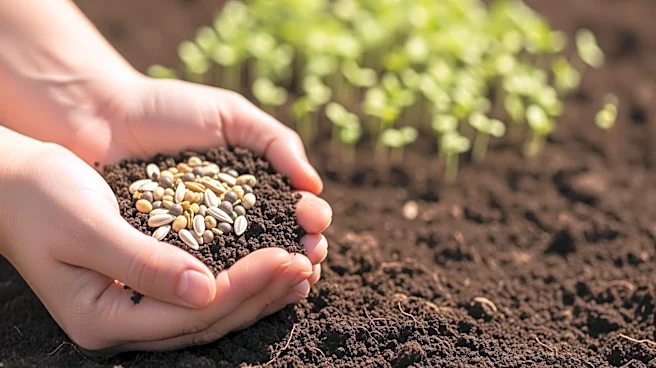
The Food and Agriculture Organization (FAO) and the International Center for Agricultural Research in the Dry Areas (ICARDA) are working together to restore Syria's seed systems, a critical step in rebuilding the country's agricultural sector. This initiative,
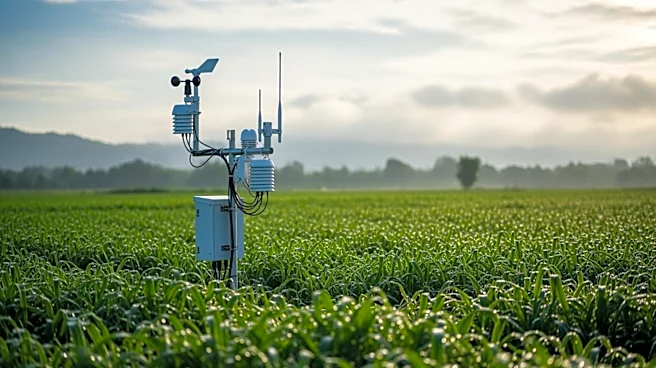
funded by the UK Foreign, Commonwealth, and Development Office, aims to reconnect Syrian farmers with high-yielding, locally adapted crop varieties. The project has established Seed Growers Associations in Aleppo, Hama, and Homs, where 49 farmers are producing certified wheat seed. The effort focuses on reducing dependence on external supplies and enhancing local capacity to produce drought-tolerant and disease-resistant seeds.
Why It's Important?
Restoring Syria's seed systems is vital for the country's food security and agricultural recovery. By enabling farmers to access quality seeds, the initiative supports increased productivity and resilience against climate challenges. This project not only addresses immediate agricultural needs but also lays the foundation for long-term sustainability and self-sufficiency. Strengthening local seed production reduces reliance on imports, which is crucial for Syria's economic stability and recovery. The initiative also empowers local farmers, placing them at the center of agricultural development and fostering community resilience.
What's Next?
As the seed multiplication cycles progress, the project aims to scale up production, with hundreds of tons of certified seed expected to be distributed by 2027. The focus will remain on legalizing and organizing the Seed Growers Associations to ensure sustainable operations. Continued support from international organizations and local institutions will be essential to maintain momentum and achieve the project's goals. The success of this initiative could serve as a model for other regions facing similar challenges, highlighting the importance of local capacity building in post-conflict recovery.