
What's Happening?
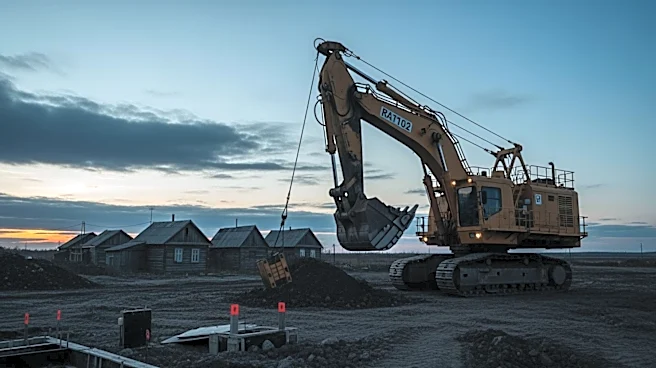
The city of Kiruna in Sweden is undergoing a significant relocation due to the expansion of iron ore mining operations by the mining company LKAB. This move involves the demolition of many buildings, including
the relocation of a historically significant church, which has been a central part of the community. The relocation has been presented as a media-friendly event, but it has left many residents, such as Lina Brännström and miner Jari Söyrinki, feeling disillusioned. They express concerns over the loss of cultural institutions like the music association 'Tusen toner,' which will not be relocated. The relocation has transformed the city center into an area of new construction, leaving the old city center largely empty and devoid of its former vibrancy.
Why It's Important?
The relocation of Kiruna highlights the tension between industrial development and community preservation. As mining operations take precedence, the cultural and social fabric of the city is at risk. This situation underscores the broader challenges faced by communities worldwide where economic interests, particularly in resource extraction, clash with the preservation of cultural heritage and community identity. The dissatisfaction among residents reflects a growing concern about the prioritization of economic gains over social and cultural well-being, raising questions about sustainable development and the rights of local communities in the face of industrial expansion.
What's Next?
As the relocation progresses, the future of Kiruna's community and cultural institutions remains uncertain. Residents like Lina Brännström and Jari Söyrinki may continue to advocate for the preservation of their cultural heritage and seek assurances from LKAB and local authorities about the future of their community. The situation may prompt discussions on how to balance industrial growth with community needs, potentially influencing policy decisions on urban planning and cultural preservation in similar contexts.
Beyond the Headlines
The relocation of Kiruna could serve as a case study for other communities facing similar challenges. It raises ethical questions about the responsibility of corporations to the communities they impact and the role of government in mediating these interests. The situation also highlights the potential for cultural loss in the face of economic development, prompting a reevaluation of how cultural heritage is valued and protected in modern society.