
What's Happening?
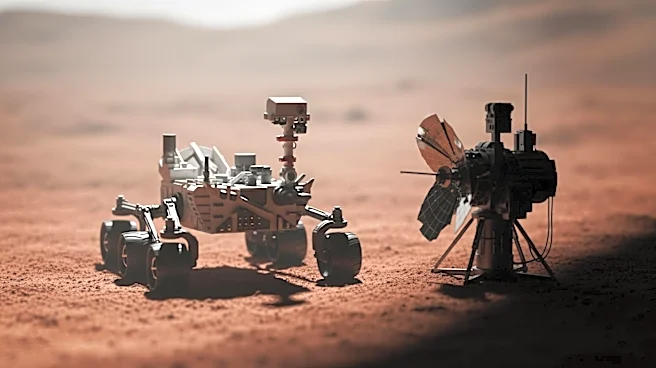
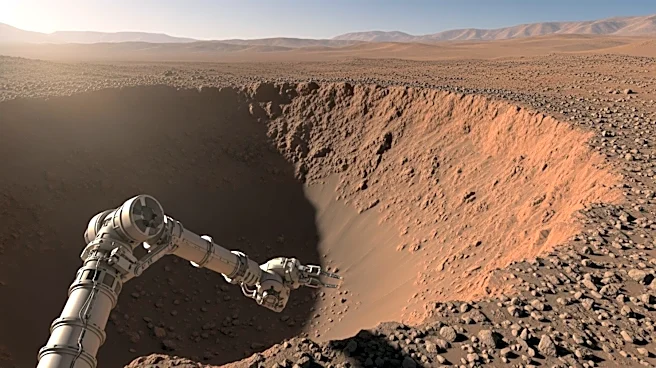
NASA's Curiosity rover is currently exploring a small crater on Mars, informally named 'Antofagasta,' which is approximately 10 meters in diameter. The crater is believed to be relatively young, potentially
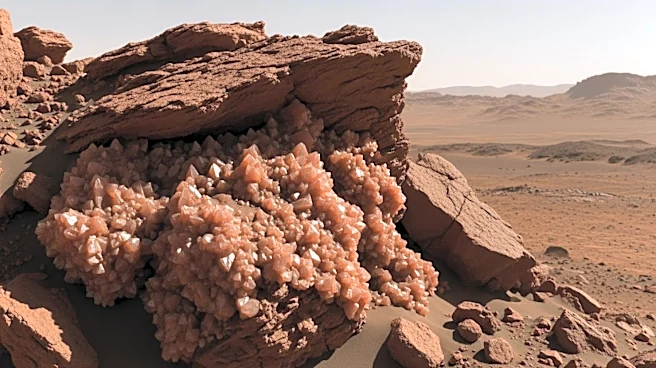
less than 50 million years old, which is considered young in Martian geological terms. This exploration is significant as craters can expose materials that have been buried, offering a chance to study organic molecules that might have been shielded from Mars' harsh surface conditions. The rover's mission includes analyzing the crater's materials to determine if they contain complex chemistry that could provide insights into Mars' past. The team is particularly interested in whether the crater is large enough to have excavated deep rocks that could contain such materials.
Why It's Important?
The exploration of the Antofagasta crater by Curiosity is crucial for understanding Mars' geological history and the potential for past life. Discovering organic molecules in the crater could provide evidence of past life or the conditions that might have supported life. This mission also contributes to the broader goals of Mars exploration, which include assessing the planet's habitability and preparing for future human missions. The findings could influence future exploration strategies and the selection of landing sites for upcoming missions, potentially impacting the scientific and economic aspects of space exploration.
What's Next?
Curiosity will continue its journey towards the crater, collecting images and data to analyze the crater's rim and interior. The mission team will assess the collected data to determine the next steps, which may include drilling into the crater's rocks if they meet the necessary criteria. The results of this exploration could guide future missions and research on Mars, particularly in the search for signs of past life and the study of the planet's geological processes.