





What's Happening?
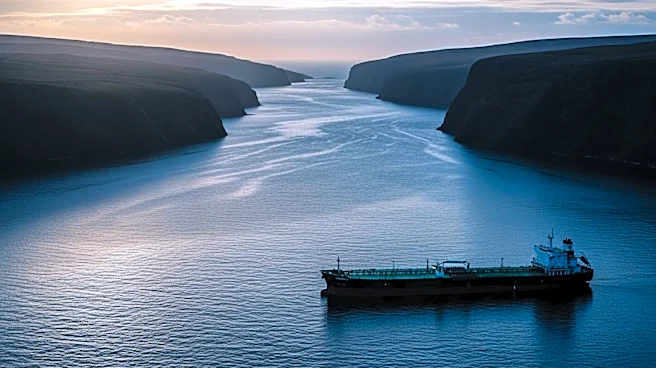
The closure of the Strait of Hormuz has led to significant disruptions in global oil supply, with Saudi Aramco's CEO Amin Nasser warning of a potential loss of 100 million barrels weekly. This situation has prompted African oil producers, including Nigeria,
Angola, and Algeria, to prepare for increased demand as they step in to fill the supply gap. The African oil industry, which has already benefited from price increases following geopolitical tensions, is now facing new challenges and opportunities. Angola, for instance, has seen a rise in export value despite a decrease in volume, thanks to higher international prices. Meanwhile, Nigeria's Dangote Refinery has transformed the country into a net exporter of petroleum products, significantly impacting its oil sector. Algeria continues to strengthen its position as a leading oil exporter, with robust demand for its crude oil globally.
Why It's Important?
The disruption in the Strait of Hormuz presents both challenges and opportunities for African oil producers. As global oil inventories deplete, countries like Nigeria, Angola, and Algeria are well-positioned to capitalize on the shifting market dynamics. This could lead to increased revenues and investment in their oil sectors, potentially boosting their economies. However, the situation also highlights the vulnerability of import-dependent African nations to supply shocks, underscoring the need for enhanced energy security and infrastructure. The ability of these countries to adapt and optimize their energy sectors could have long-term implications for their economic stability and growth.
What's Next?
As the situation in the Strait of Hormuz unfolds, African oil producers are likely to continue expanding their refining capacities and export capabilities. Angola is set to enhance its refining sector with new projects, while Nigeria's Dangote Refinery is expected to further increase its output. Algeria is also pursuing expansion deals to boost production. These developments could lead to increased investment in the African oil industry, attracting global attention. Additionally, African countries may focus on diversifying their energy sources and improving infrastructure to mitigate future supply disruptions.
Beyond the Headlines
The current disruption serves as a critical lesson for African nations on the importance of energy diversification and infrastructure development. By reducing reliance on external supplies and optimizing their ports and waterways, these countries can enhance their energy security. This situation also highlights the potential for African oil producers to play a more significant role in the global energy market, potentially shifting the balance of power and influence in the industry.