








What's Happening?
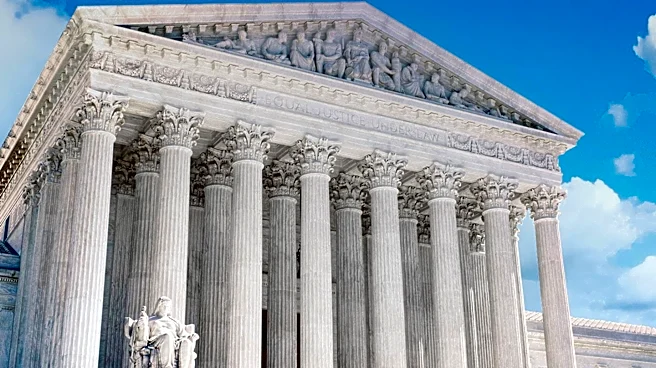
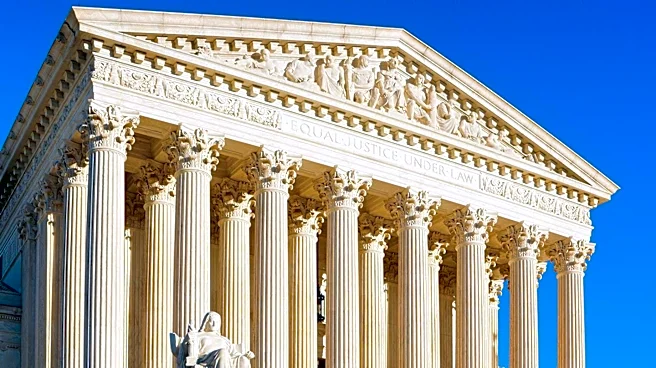
The U.S. Supreme Court recently heard arguments on how the 1988 Video Privacy Protection Act (VPPA) should apply to consumer data in the digital age. This law, originally enacted after a list of videos rented by Robert Bork was leaked, aims to protect
individuals' viewing histories. The current case, Salazar v. Paramount Global, questions whether the VPPA extends to modern streaming websites that use tracking pixels to share users' viewing data with platforms like Meta for targeted advertising. Michael Salazar, a California man, claims his data was shared without authorization after he subscribed to a free sports newsletter and watched videos on a Paramount Global-owned site. Lower courts have been divided on the law's applicability, leading to the Supreme Court's review. Several conservative justices expressed concerns about repurposing a law designed for physical video rentals to regulate internet data sharing, while liberal Justice Elena Kagan suggested that websites could easily obtain user consent to comply with the law.
Why It's Important?
The Supreme Court's decision in Salazar v. Paramount Global carries significant implications for digital privacy rights and the ad-supported streaming industry. A ruling in favor of Salazar could establish that hundreds of millions of Americans have federal privacy rights over their online viewing habits, potentially exposing the entire ad-supported streaming sector to billions of dollars in statutory liability. This would force companies to re-evaluate their data-sharing practices and consent mechanisms. Conversely, a ruling against Salazar could limit the scope of the VPPA, potentially leaving a gap in federal privacy protections for online viewing data. The outcome will influence how companies collect, use, and share user data, particularly concerning video consumption, and could set a precedent for how older privacy laws are interpreted in the context of rapidly evolving digital technologies. The case highlights the ongoing challenge of adapting existing legal frameworks to address contemporary privacy concerns in the digital economy.
What's Next?
The Supreme Court is expected to issue its ruling on Salazar v. Paramount Global before its current session concludes in late June. Regardless of the specific outcome, the decision will likely influence numerous pending class-action lawsuits related to the VPPA. Companies in the ad-supported streaming industry and any platform that hosts video content and uses third-party tracking pixels are closely watching this case. Legal experts suggest that businesses should proactively audit their consent infrastructure and data-sharing practices, especially concerning video-viewing data. The court's deliberations may also touch upon whether internet streaming platforms qualify as 'video tape service providers' under the original 1988 law, a threshold question that could further reshape the litigation landscape. The emphasis from some justices on obtaining user consent suggests that even if the court rules narrowly, companies may still face pressure to enhance their transparency and consent mechanisms.
Beyond the Headlines
This case delves into the fundamental tension between technological advancement and existing legal frameworks designed for a different era. The 'Bork bill,' as the VPPA is known, was a direct response to a specific privacy breach involving physical video rentals. Its application to the complex, often invisible, data flows of the internet raises questions about legislative intent versus technological evolution. The debate highlights the broader lack of a comprehensive federal consumer data privacy law in the U.S., unlike regulations such as Europe's GDPR. The resurgence of the VPPA as a tool for class-action lawsuits underscores the vacuum in American privacy law, pushing courts to interpret outdated statutes in novel ways. The outcome could either empower consumers with greater control over their digital footprints or provide a significant win for the ad-tech industry, further shaping the ethical and legal boundaries of data collection in the digital age.