



What's Happening?
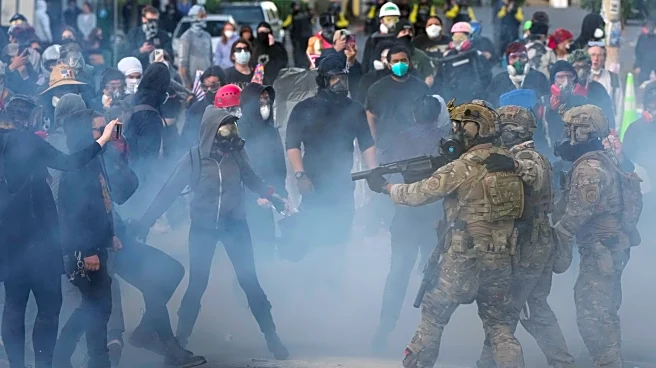
A federal judge in Oregon has issued a preliminary injunction restricting the use of tear gas and other chemical or projectile munitions by federal officers at protests against U.S. Immigration and Customs Enforcement (ICE) in Portland. This decision
follows a lawsuit filed by the ACLU of Oregon on behalf of protesters and freelance journalists. The order, issued by U.S. District Judge Michael Simon, mandates that such munitions can only be used when someone poses an imminent threat of physical harm. The ruling also prohibits indiscriminate use that could affect bystanders, specifying that actions like trespassing or refusing to disperse are considered passive resistance. The injunction is part of ongoing legal actions addressing concerns over aggressive crowd-control tactics by federal officers amid nationwide protests against immigration enforcement policies.
Why It's Important?
The ruling is significant as it addresses the balance between law enforcement practices and the protection of First Amendment rights during protests. The decision could impact how federal officers manage crowd control at protests, potentially leading to changes in training and operational protocols. It highlights ongoing tensions between federal authorities and civil rights groups over the use of force in public demonstrations. The outcome of this case may influence future legal standards and policies regarding the use of force by law enforcement in protest situations, affecting both public safety and civil liberties.
What's Next?
The preliminary injunction will remain in effect as the lawsuit proceeds, potentially leading to further legal challenges or adjustments in federal enforcement strategies. The Department of Homeland Security, a defendant in the case, has not yet commented on the ruling. The case may set a precedent for similar lawsuits across the country, prompting other jurisdictions to reevaluate their crowd-control measures. Stakeholders, including civil rights organizations and law enforcement agencies, will likely continue to monitor the case closely, as its outcomes could influence broader national policies on protest management.