
What's Happening?
Health workers in the Democratic Republic of Congo (DRC) are threatening to abandon their posts in response to unpaid wages amid an ongoing Ebola outbreak. The outbreak, caused by the Bundibugyo strain, has infected over 3,874 people and resulted in 1,751
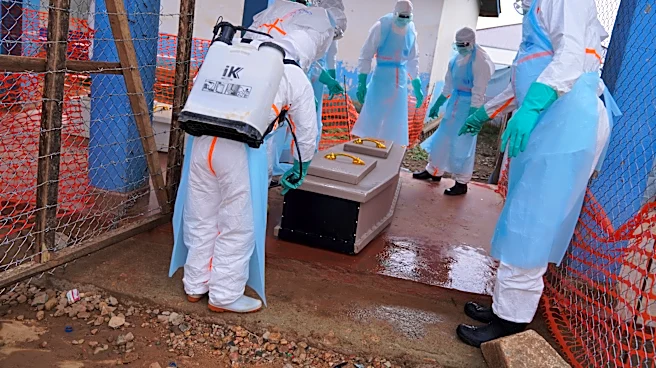
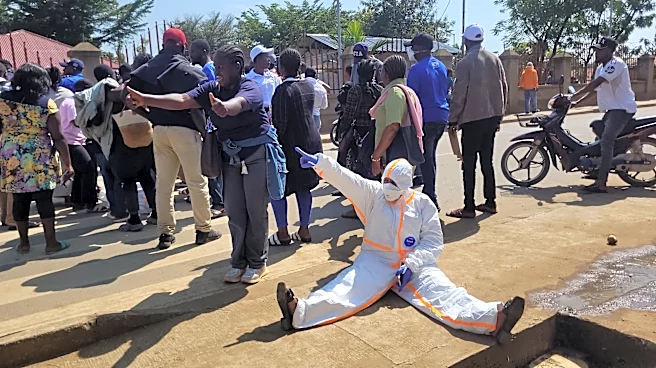
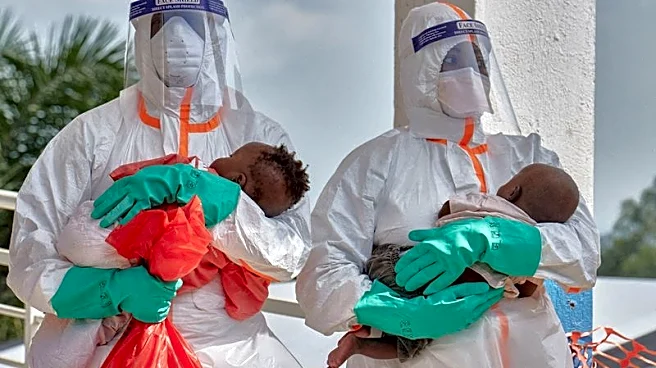
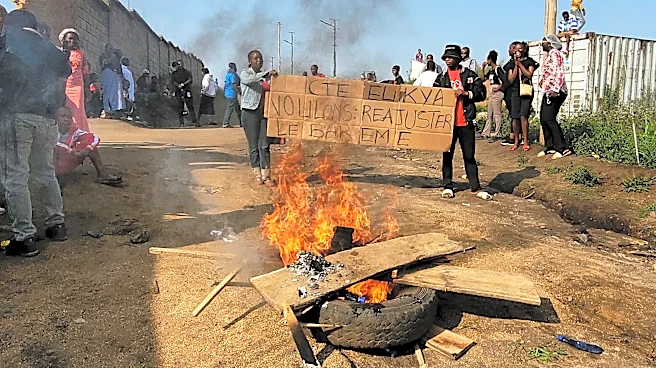
deaths. Health workers, including those at the Elikya Ebola Treatment Center in Bunia, are protesting delayed government payments, which have not been received for months. Médecins Sans Frontières (MSF) continues to meet its obligations, but the lack of government compensation has led to protests and threats of work boycotts. The outbreak is exacerbated by ongoing conflict and weak health infrastructure, complicating efforts to contain the virus.
Why It's Important?
The situation highlights the critical role of health workers in managing public health crises and the challenges they face, including safety risks and financial insecurity. The delayed payments threaten to undermine the Ebola response, as health workers are essential in treating patients and preventing the virus's spread. The outbreak's rapid escalation poses a significant public health threat, and any disruption in response efforts could lead to further transmission. The crisis underscores the need for timely compensation and support for frontline workers, who are vital in maintaining public confidence in the health system.
What's Next?
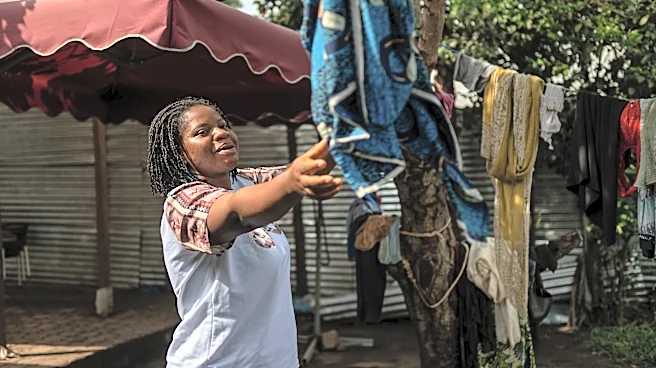
The DRC government has acknowledged the payment delays and is processing outstanding wages. However, the situation remains tense, with health workers like Micheline Kayimpa ready to walk out if payments are not received. The success of the Ebola response depends on resolving these issues promptly to ensure that health workers remain on the front lines. The international community and aid organizations may need to increase support to stabilize the situation and prevent further spread of the virus.