





What's Happening?
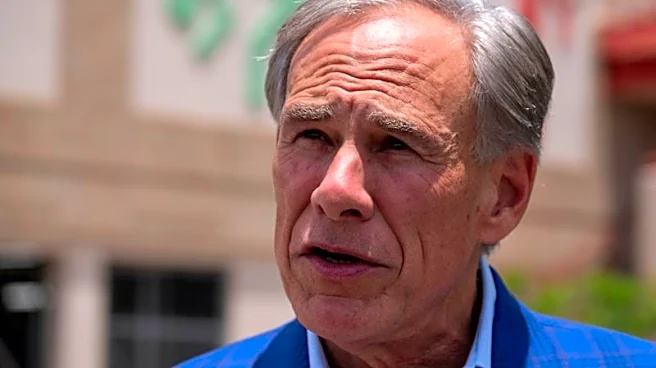
Minnesota Attorney General Keith Ellison has filed a federal lawsuit against Texas Governor Greg Abbott to compel the extradition of Immigration and Customs Enforcement (ICE) agent Christian Castro. Castro is charged with four counts of second-degree
assault and one count of falsely reporting a crime in connection with a nonfatal shooting during Operation Metro Surge in Minneapolis. Prosecutors allege Castro fired a gun at an occupied home on January 14, striking a Venezuelan man in the leg, and then lied about the incident. A Hennepin County District Court judge found probable cause and issued a nationwide arrest warrant. Castro was arrested in Texas on May 29, but Governor Abbott has reportedly withheld a rendition warrant, preventing his transfer to Minnesota for prosecution. Ellison asserts that Abbott's refusal is unconstitutional and violates federal and Texas law.
Why It's Important?
This lawsuit represents a significant legal and political clash between two states and highlights complex issues of federalism, law enforcement accountability, and inter-state cooperation. The refusal of a governor to extradite an individual charged with serious crimes, especially a federal agent, raises questions about the principle of equal justice under the law and the proper functioning of the justice system across state lines. If Governor Abbott's actions are upheld, it could set a precedent that complicates the prosecution of individuals who cross state borders after allegedly committing crimes. The case also brings scrutiny to the conduct of federal agents and the accountability mechanisms in place for their actions, particularly in sensitive operations like immigration enforcement. The outcome could influence future extradition processes and the balance of power between state and federal authorities.
What's Next?
Attorney General Ellison's office will be requesting a temporary restraining order to prevent the Cameron County Sheriff's Office from releasing Castro, ensuring he remains in custody pending the resolution of the extradition dispute. The federal lawsuit will proceed, with courts likely examining the constitutional and legal arguments presented by both Minnesota and Texas. The outcome of this legal battle could have far-reaching implications for extradition law and inter-state relations. If the court compels extradition, Castro will face trial in Minnesota for the alleged assault and false reporting. Conversely, if Abbott's refusal is upheld, it could create a legal loophole for individuals to evade prosecution by crossing state lines, particularly if they are federal agents.
Beyond the Headlines
This case delves into the intricate legal and political dynamics between state sovereignty and federal authority, particularly concerning law enforcement. The alleged actions of an ICE agent, Christian Castro, and the subsequent legal battle over his extradition, could fuel debates about the scope of federal agent immunity and the oversight of federal operations within state jurisdictions. It also touches upon the broader political tensions surrounding immigration enforcement and the differing approaches of states like Minnesota and Texas. The lawsuit could become a landmark case, clarifying the limits of a governor's power to refuse extradition and reinforcing the mechanisms for accountability for all individuals, regardless of their official capacity. The ethical implications of an agent allegedly lying about a shooting incident also raise concerns about transparency and trust in law enforcement.