




What's Happening?
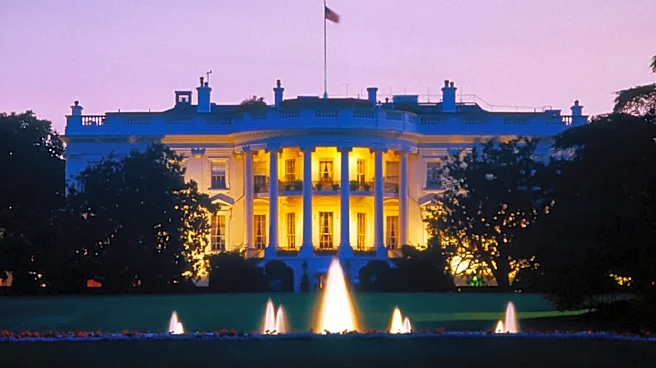
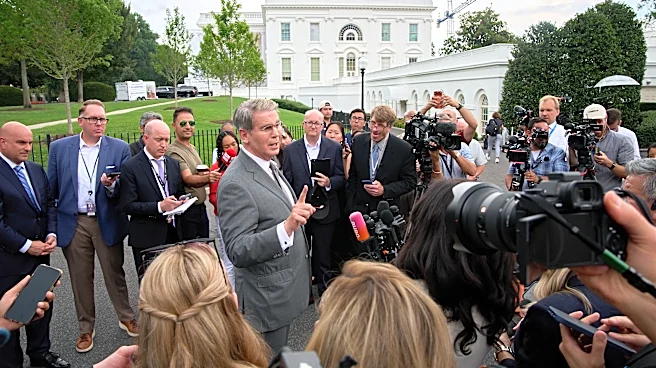
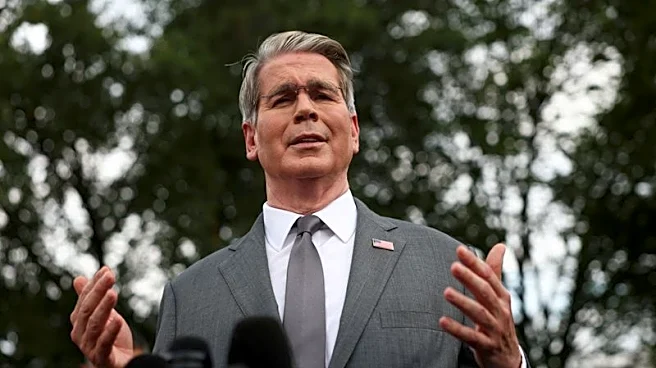
Treasury Secretary Scott Bessent has drawn criticism for stating he did not 'really understand' a recent spike in oil prices, moments after announcing that the Trump administration would impose the 'toughest sanctions in history' on Iran. Bessent made
these comments during a press gaggle outside the White House, dismissing the 24-hour price increase as 'noise.' This occurred as crude oil prices reached approximately $88 per barrel, an increase from $67 before the war with Iran began in late February, and gasoline prices rose to $4.10 per gallon from $2.98. Critics, including Fox News co-host Jessica Tarlov, Democratic Representative Ted Lieu, Arizona Senator Ruben Gallego, and Georgia Senator Raphael Warnock, linked the oil price surge directly to the ongoing conflict with Iran and the administration's actions.
Why It's Important?
The Treasury Secretary's remarks and the subsequent criticism highlight significant concerns regarding the economic implications of U.S. foreign policy, particularly in the context of military conflicts and sanctions. The rise in oil and gasoline prices directly impacts American consumers and businesses, potentially leading to increased inflation and reduced purchasing power. Bessent's perceived lack of understanding or acknowledgment of the link between sanctions, war, and energy costs could undermine public confidence in the administration's economic management. This situation also underscores the complex interplay between geopolitical events, energy markets, and domestic economic stability. The criticism from various political figures suggests a bipartisan concern over the economic consequences of the Iran conflict and the transparency of the administration's explanations.
What's Next?
The Trump administration is expected to continue its policy of imposing sanctions on Iran, which could further influence global oil markets. Treasury Secretary Bessent may face continued scrutiny and pressure to provide clearer explanations regarding the economic impacts of these policies. The ongoing war with Iran and the associated sanctions will likely remain a significant factor in energy prices, affecting both the U.S. economy and international relations. Political leaders and economic analysts will continue to monitor these developments closely, with potential for further debate and policy adjustments depending on the trajectory of oil prices and the broader economic landscape. The administration's response to these criticisms and its future communications on economic policy will be key.
Beyond the Headlines
This incident reveals a deeper tension between foreign policy objectives and domestic economic realities. The decision to impose severe sanctions and engage in military action, while aimed at achieving specific geopolitical outcomes, often carries significant economic costs that are borne by the populace. The disconnect between the administration's stated goals and the immediate economic consequences, as highlighted by critics, can erode public trust and fuel political opposition. Furthermore, it raises questions about the comprehensive assessment of risks and benefits before enacting major foreign policy shifts. The situation also reflects the broader challenge of communicating complex economic realities to the public, especially when those realities are influenced by highly sensitive international events. The long-term implications could include a re-evaluation of the economic tools used in foreign policy and a greater demand for transparency regarding their potential domestic impacts.