







What's Happening?
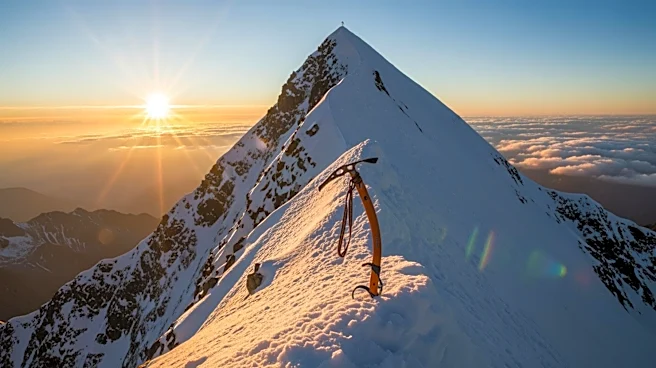
American climber Tyler Andrews has set a new speed record for summiting Mount Everest using supplementary oxygen. Andrews, a 36-year-old from Concord, Massachusetts, reached the peak of the world's highest mountain in 9 hours and 55 minutes, surpassing
the previous record of 10 hours and 56 minutes set by Nepali climber Lhakpa Gelu Sherpa in 2003. The record-breaking climb took place on Thursday, and Andrews' team has reported the achievement to AFP. The climb requires formal verification by Nepal's mountain authorities. Andrews' ascent was tracked live via GPS, and he was supported by guides who provided supplementary oxygen, food, and water. This achievement follows an earlier attempt by Andrews to climb Everest without supplementary oxygen, which he had to abandon. Andrews, a cancer survivor, is also using his climb to raise funds for youth athletes in Ecuador and Nepal.
Why It's Important?
Tyler Andrews' record-setting climb is significant as it highlights the growing interest and competition in high-altitude mountaineering, particularly on Mount Everest. This achievement not only showcases human endurance and athleticism but also brings attention to the increasing number of climbers attempting Everest each year. The record comes amid concerns about overcrowding on the mountain, which has led to dangerous conditions and fatalities. This season alone, five climbers have died, underscoring the risks involved. Andrews' climb also serves a philanthropic purpose, as he is raising funds to support youth athletes, which could inspire more climbers to use their expeditions for charitable causes. The record may encourage more climbers to attempt similar feats, potentially increasing traffic on the mountain.
What's Next?
Following Andrews' record, there may be increased scrutiny on the verification process by Nepal's mountain authorities to ensure the accuracy of such claims. The achievement could lead to more climbers attempting to break records on Everest, potentially exacerbating the issue of overcrowding. Authorities may need to implement stricter regulations to manage the number of climbers and ensure safety. Additionally, Andrews' fundraising efforts could inspire other athletes to use their platforms for social good, potentially leading to more charitable initiatives in the mountaineering community.
Beyond the Headlines
The record set by Tyler Andrews raises questions about the ethical implications of high-altitude climbing, particularly regarding the use of supplementary oxygen and the environmental impact of increased climber traffic. The growing popularity of Everest expeditions has led to concerns about the sustainability of such activities and the preservation of the mountain's natural environment. Furthermore, the commercialization of Everest climbs has sparked debates about the accessibility of such adventures and the potential exploitation of local Sherpas, who often face significant risks to support climbers. These issues may prompt discussions about the future of mountaineering and the need for more responsible and sustainable practices.