







What's Happening?
A newly released Defense Intelligence Agency (DIA) report for 2026 warns that China, Russia, and other U.S. adversaries are rapidly expanding their military capabilities in space, posing significant threats to U.S. national security. The report, titled
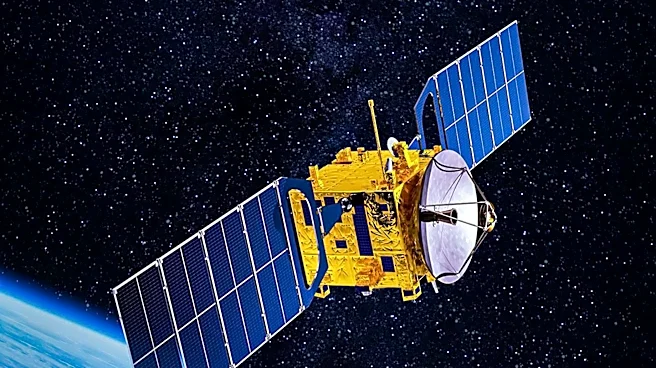
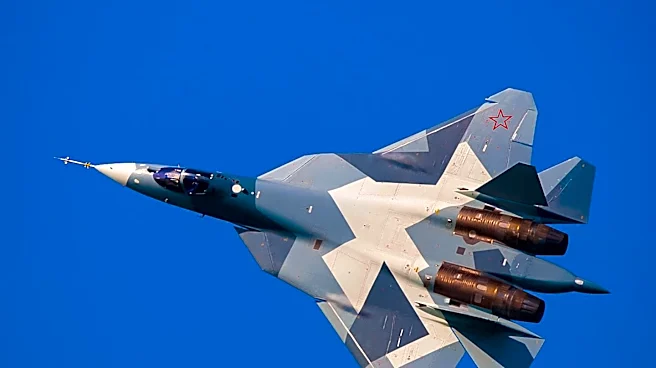
'Challenges to Security in Space: Congestion, Competition, and Cooperation,' details how these nations are developing sophisticated weapons capable of disrupting, disabling, or destroying satellites, communications networks, and critical infrastructure. Key findings include China's rapidly expanding orbital military capabilities, encompassing a growing fleet of satellites, counterspace weapons, surveillance networks, and launch systems. Russia is also investing heavily in counterspace weapons, including electronic warfare systems, cyber capabilities, and antisatellite missiles. The report also highlights the growing threat of space warfare, which could involve cyberattacks, electronic jamming, directed-energy weapons, and potentially nuclear weapons in orbit. Additionally, the DIA report features imagery of China's secretive Shenlong spaceplane, indicating Beijing's expanding orbital capabilities.
Why It's Important?
This DIA report underscores a critical and evolving threat to U.S. national security, as the nation's military and civilian infrastructure increasingly rely on space-based assets. The development of advanced counterspace capabilities by China and Russia directly challenges the U.S.'s long-standing advantage in space, potentially jeopardizing satellite communications, navigation systems, and intelligence gathering. The report's emphasis on the potential for space warfare, including cyberattacks and directed-energy weapons, signifies a new dimension of conflict that could have devastating real-world impacts on U.S. military operations and economic stability. The militarization of space also raises concerns about orbital congestion and space debris, which could further complicate operations and increase the risk of collisions. For the U.S., this necessitates urgent investment in resilient space systems, enhanced defensive capabilities, and international diplomatic efforts to establish norms of behavior in space to prevent conflict and protect vital assets.
What's Next?
In response to the growing threats outlined in the DIA report, the U.S. is expected to accelerate its efforts to enhance space domain awareness, develop more resilient satellite systems, and invest in defensive counterspace capabilities. This will likely involve increased funding for space-related research and development, as well as closer collaboration with allies on space security initiatives. The report's findings will also inform U.S. foreign policy, potentially leading to more assertive diplomatic engagement with China and Russia regarding responsible behavior in space. There may be calls for international treaties or agreements to limit the development and deployment of offensive space weapons. Furthermore, the U.S. military will likely conduct more exercises focused on space warfare scenarios to improve readiness and develop strategies for operating in a contested space environment. The continued monitoring of China's Shenlong spaceplane and other advanced space technologies will remain a priority for U.S. intelligence agencies.
Beyond the Headlines
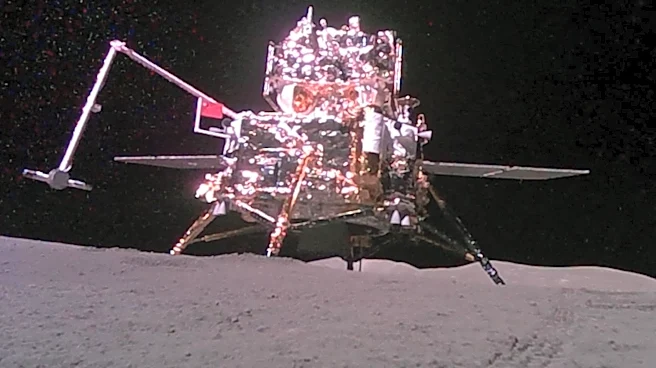
The DIA report's findings on the militarization of space by China and Russia highlight a profound shift in global power dynamics and the nature of future warfare. Beyond the immediate military implications, the increasing reliance on commercial satellites for critical functions, as noted in the report, means that private sector assets are becoming potential targets in conflicts. This blurs the lines between military and civilian infrastructure, raising complex legal and ethical questions about targeting in space. The report also touches upon the potential for the militarization of the Moon, suggesting that the competition for strategic advantage could extend beyond Earth's orbit. This opens up a new frontier for geopolitical rivalry, with long-term implications for resource exploitation, scientific exploration, and international cooperation in space. The ethical challenge lies in balancing national security interests with the imperative to maintain space as a peaceful domain for all nations, preventing an arms race that could destabilize the entire orbital environment.