





What's Happening?
NASA's Earth Observatory has captured images of the Samail Ophiolite in the United Arab Emirates, one of the world's largest and best-preserved exposures of ancient oceanic lithosphere. This geological feature, located east of Dubai, is a remnant of the oceanic crust
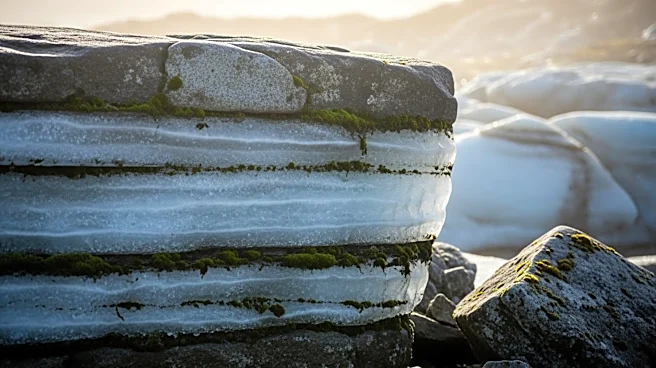
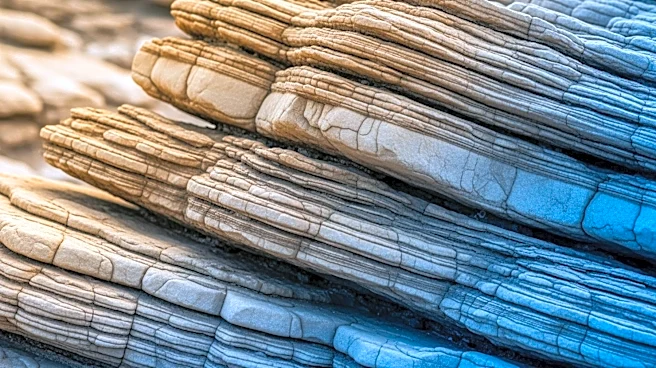
and upper mantle that was thrust onto the Arabian plate through a process called obduction. The limestone ridges in the area, including Jabal al Fāyah, provide evidence of the region's watery past, having formed from marine sediments deposited millions of years ago. The site is also significant for its archaeological value, containing evidence of human occupation dating back to the Middle Paleolithic era, with stone tools and artifacts indicating early human adaptation to the harsh desert environment.
Why It's Important?
The Samail Ophiolite offers valuable insights into Earth's geological history and the processes that shape oceanic lithosphere. Understanding these ancient formations helps scientists study tectonic activity and the history of Earth's crust. Additionally, the archaeological findings in the area provide crucial information about early human migration and survival strategies in challenging environments. This research contributes to our knowledge of human evolution and the routes taken by early Homo sapiens out of Africa. The site's designation as a UNESCO World Heritage site underscores its global significance in both geological and archaeological contexts.