



What's Happening?
Researchers at The Hong Kong University of Science and Technology (HKUST) have made a significant breakthrough in understanding the molecular mechanisms of the enzyme DICER, which plays a crucial role in RNA silencing. The study, published in Nature,
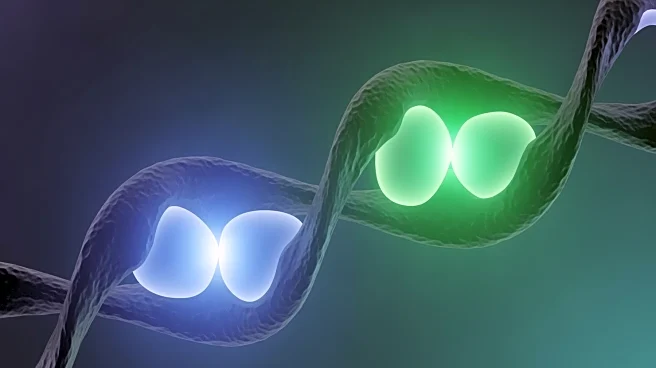
details how DICER's precision in cleaving RNA substrates is governed by a dual-pocket recognition system. This system allows DICER to accurately process microRNAs (miRNAs), which are essential for regulating gene expression. The research team, led by Professor Tuan Anh Nguyen, used advanced biochemical assays and cryogenic electron microscopy to capture detailed images of DICER interacting with RNA. They discovered that DICER has two distinct 5'-end binding pockets, each with a preference for different nucleotides, which helps the enzyme achieve single-nucleotide accuracy in RNA cleavage.
Why It's Important?
The findings from this study have significant implications for both basic biological research and the development of RNA-based therapeutics. Understanding the precise mechanisms of DICER's function could lead to advancements in gene silencing technologies, which are used to treat genetic disorders and cancers. The ability to manipulate DICER's activity with high precision could enhance the effectiveness of these therapies. Additionally, the research provides insights into how DICER maintains its accuracy across various RNA substrates, which is crucial for preventing aberrant gene regulation that can lead to diseases. This study not only advances the field of RNA biology but also opens up new possibilities for therapeutic interventions targeting RNA processing pathways.
What's Next?
The research sets the stage for future studies aimed at developing small molecules or engineered proteins that can modulate DICER's activity or specificity. Such developments could lead to finely tuned gene regulatory interventions, offering new treatment options for diseases caused by dysfunctional RNA processing. The study also highlights the potential for using structural biology techniques, like cryo-EM, to explore other RNA-processing enzymes, paving the way for further discoveries in the field. As researchers continue to explore the intricacies of RNA biology, these findings could inspire new strategies for diagnosing and treating a range of human diseases.