


What's Happening?
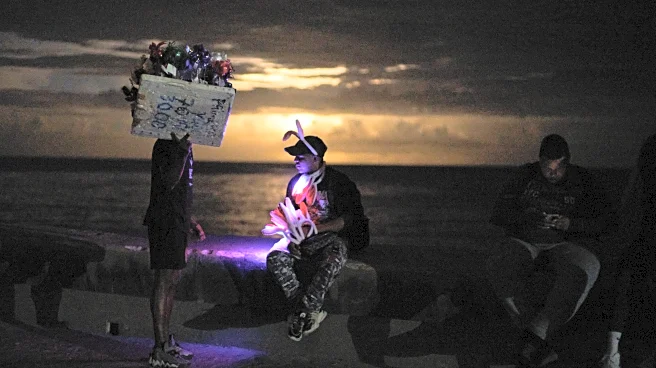
Cuba has experienced a second nationwide electrical blackout within a week, as announced by the Ministry of Energy. The blackout has left over 10 million residents without power. The Ministry stated that a total disconnection of the National Electric
System occurred, and restoration protocols are being implemented. This follows a previous blackout earlier in the week, attributed to the U.S. blocking fuel supplies from Venezuela. The state-owned electricity company had anticipated a power deficit of 1,704 megawatts during peak hours on Saturday night. The situation is exacerbated by the ongoing U.S. embargo, which has historically strained Cuba's economy since the 1959 revolution led by Fidel Castro.
Why It's Important?
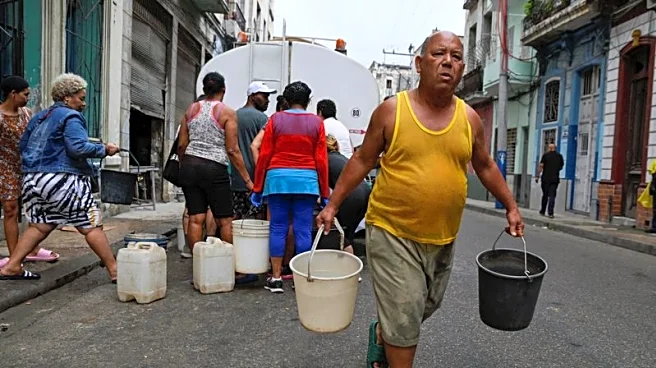
The blackout highlights the severe impact of geopolitical tensions on Cuba's infrastructure and economy. The U.S. fuel blockade has intensified Cuba's energy crisis, affecting essential services such as healthcare and agriculture. The disruption in power supply could lead to further economic instability, affecting tourism and daily life. The situation underscores the fragility of Cuba's energy infrastructure and its dependence on foreign fuel supplies. The ongoing embargo and recent blockades have compounded the challenges faced by the Cuban government, potentially leading to increased political and social unrest.
What's Next?
Cuban President Miguel Díaz-Canel has acknowledged the possibility of an attack on Cuba and is preparing accordingly. Meanwhile, discussions with U.S. counterparts regarding the fuel embargo are ongoing, although Cuba has stated it will not negotiate its political system. The Cuban government may seek alternative fuel sources or international support to mitigate the crisis. The situation could lead to increased diplomatic tensions between the U.S. and Cuba, with potential implications for regional stability.
Beyond the Headlines
The blackout and fuel blockade may have long-term implications for Cuba's economic and political landscape. The crisis could accelerate efforts to diversify energy sources and reduce reliance on foreign fuel. Additionally, the situation may influence Cuba's domestic policies and international relations, particularly with allies like Venezuela. The ongoing challenges highlight the need for sustainable energy solutions and diplomatic engagement to address the root causes of the crisis.