


What's Happening?
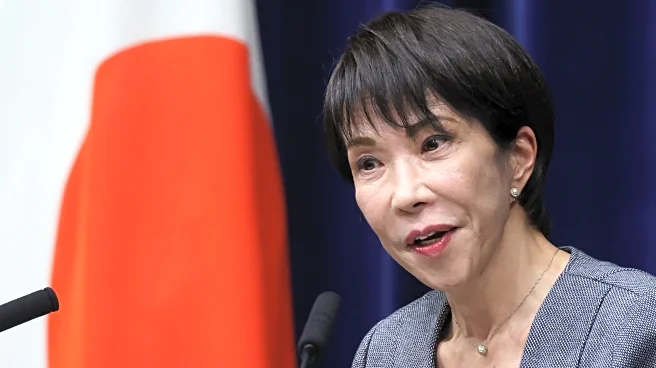
Japan's Prime Minister Sanae Takaichi is preparing to dissolve the lower house of Parliament to initiate a snap election. This move is intended to secure a public mandate for her policies, which include proactive fiscal spending and an accelerated military
buildup. Takaichi, who became Japan's first female prime minister in October, is leveraging her high approval ratings, currently around 70%, to strengthen her party's position. The snap election is anticipated to occur as early as February 8, following the dissolution of the house on January 23. This decision has been met with criticism from opposition lawmakers, who argue it could delay crucial budget discussions. The budget, amounting to a record 122.3 trillion yen, is essential for addressing inflation and supporting economic growth.
Why It's Important?
The decision to call a snap election is significant as it reflects Takaichi's strategy to consolidate power and push through her policy agenda. By seeking a fresh mandate, she aims to bolster her party's standing in Parliament, which is crucial for passing the budget and other legislative measures. The outcome of this election could impact Japan's fiscal policies and its approach to military expansion, potentially affecting regional dynamics, especially in light of tensions with China. Additionally, Takaichi's leadership style and policy priorities, including her conservative stance on social issues, could influence Japan's domestic and international relations.
What's Next?
If the snap election proceeds as planned, the results will determine the governing coalition's ability to implement its policy agenda. A successful election for Takaichi could lead to a more stable government capable of enacting significant fiscal and military policies. However, opposition parties may intensify their efforts to challenge her policies, particularly if they perceive the election as a strategic maneuver to bypass parliamentary debate. The international community will also be watching closely, as Japan's political and economic decisions have broader implications for regional stability and global markets.