






What's Happening?
New research is investigating how individuals' backgrounds and experiences influence their understanding of severe weather warnings issued by the National Weather Service (NWS). The NWS issues over 50,000 warnings annually across the country, but their effectiveness
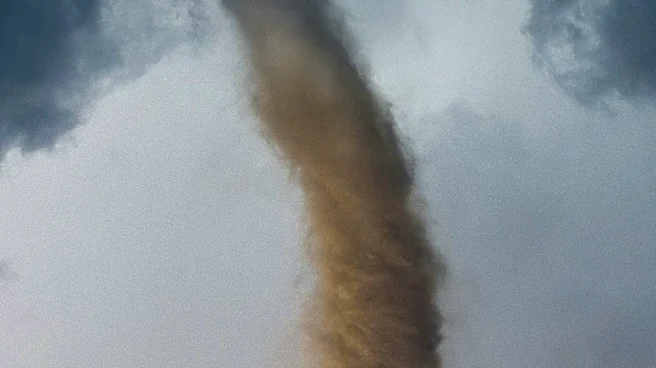
hinges on public comprehension. The study aims to understand how people interpret these messages, particularly the technical language and jargon used. For instance, someone from the West Coast, unfamiliar with tornadoes, might panic upon receiving a tornado warning in Oklahoma, while a long-term Oklahoma resident might experience 'warning fatigue' from frequent alerts. The research emphasizes that misunderstanding a warning, such as confusing a 'watch' with a 'warning,' can be as dangerous as not understanding it at all. The study involves surveying students and faculty at South Dakota Mines, who come from various regions, to assess their comprehension of meteorological terminology and its impact on decision-making.
Why It's Important?
This research is critically important for enhancing public safety across the United States. If severe weather warnings are not clearly understood, individuals cannot make informed decisions to protect themselves and their families, potentially leading to increased casualties and property damage. The study highlights a significant challenge in meteorology: effectively communicating complex scientific information to a diverse public with varying levels of prior experience and understanding. Addressing issues like 'warning fatigue' and the interpretation of technical jargon is essential for improving the efficacy of NWS alerts. Furthermore, the research extends beyond individual comprehension to include community decision-makers such as firefighters, police, and emergency managers, whose understanding of these messages directly impacts community-wide safety and response efforts. Improving message clarity can lead to more proactive and effective disaster preparedness and response.
What's Next?
The ongoing research will continue to gather data through surveys to analyze how individuals' experiences with weather influence their understanding of severe weather messages. The results will provide statistical insights into the effectiveness of current communication strategies and identify areas for improvement. This information will be crucial for meteorologists and communication specialists to refine warning messages, making them more accessible and actionable for the general public and community leaders. Future efforts may involve developing new communication formats, educational campaigns, or personalized warning systems that account for regional differences in weather phenomena and public familiarity. The ultimate goal is to ensure that all individuals, regardless of their background, can quickly and accurately understand severe weather threats and take appropriate protective actions.
Beyond the Headlines
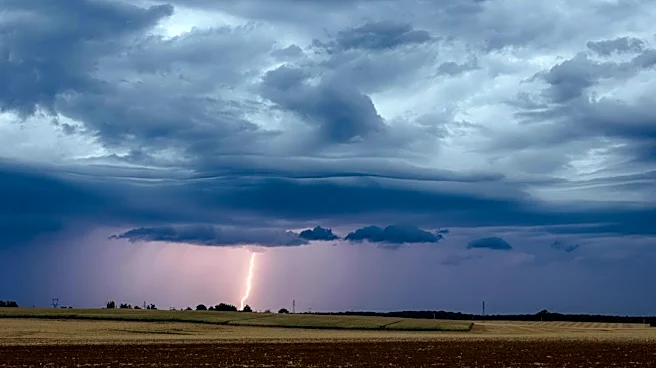
This research delves into the psychological and sociological aspects of disaster preparedness, moving beyond purely meteorological forecasting. It touches upon cognitive biases, risk perception, and the impact of repeated exposure to warnings on human behavior. The concept of 'warning fatigue' is a critical area of study, as it can lead to complacency or disregard for genuine threats, posing a significant public health and safety challenge. The study also implicitly raises questions about educational disparities in scientific literacy and how these might affect an individual's ability to interpret complex information during emergencies. Ultimately, this research contributes to a broader understanding of human-weather interactions and the development of more human-centered approaches to emergency communication, which could have implications for other types of public safety alerts beyond severe weather.