



What's Happening?
Earth Funeral, a company specializing in human composting as an alternative to traditional burial and cremation, has secured zoning approval to spread human composted remains on a 14.5-acre site in Snow Hill, Eastern Shore, Maryland. This decision follows
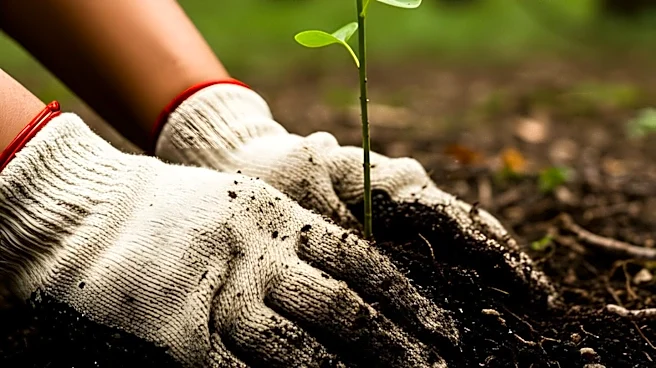
the opening of their first East Coast facility in Elkridge, Maryland, which houses 50 decomposition vessels and plans to expand to 126. The process involves placing deceased individuals into a 4-by-8-foot stainless steel vessel with wood chips and wildflowers, mimicking natural decomposition. After 30 to 60 days, the body transforms into 250 to 300 pounds of nutrient-rich compost. Families can take home a portion of this soil, while unclaimed remains will be transported from Elkridge to the Snow Hill site twice a year in sealed containers and tilled into the land at a rate of one to two acres annually. Maryland legalized natural organic reduction in 2024 with the Green Death Care Options Act, making it one of 14 states to permit this practice. The company plans to plant native trees on the site under the guidance of a professional forester and a U.S. Department of Agriculture nutrient management plan, with the goal of cultivating a forest over 15 years.
Why It's Important?
This development marks a significant step in the growing acceptance and implementation of green death care options in the U.S. The establishment of a dedicated site for spreading human composted remains highlights a shift towards environmentally conscious end-of-life choices. For individuals seeking alternatives to traditional burial or cremation, human composting offers a method that returns remains to the earth in a way that can nourish new life, aligning with ecological values. The project's focus on reforestation and soil health on the Eastern Shore could serve as a model for similar initiatives nationwide, promoting sustainable land use and conservation. However, the initiative also faces local opposition, raising questions about the use of agricultural land for such purposes and ethical concerns regarding the 'desecration' of human remains. This divergence of opinion underscores the ongoing societal debate surrounding innovative death care practices and their integration into communities and landscapes.
What's Next?
Earth Funeral's zoning approval for the Snow Hill site is subject to a 30-day appeal window, which will open after the case is finalized on September 10. Aggrieved parties, such as nearby residents or those facing financial impact, may file an appeal in Circuit Court. Additionally, the Worcester County Board of Commissioners, as an elected body, has the option to file its own appeal, indicating potential continued legal and political challenges. If the approval stands, Earth Funeral will proceed with planting native trees on the site, adhering to a 50-foot perimeter buffer and growing cover crops on sections awaiting saplings. The company anticipates it could take up to 15 years to fully plant the parcel. The site will not be open for public visitation and will not be considered a cemetery. Earth Funeral will continue to test the compost for pathogens, metals, and harmful bacteria to ensure environmental safety, addressing concerns raised by some community members.
Beyond the Headlines
The emergence of human composting and dedicated sites for spreading remains like the one in Snow Hill reflects a broader cultural and ethical re-evaluation of death and environmental stewardship. This practice challenges traditional funerary norms, offering a 'return to nature' that resonates with increasing ecological awareness. The debate surrounding the Snow Hill site, particularly concerns about the 'desecration' of human remains versus the environmental benefits, highlights a tension between long-held spiritual and cultural beliefs and modern ecological imperatives. The project also touches upon land use ethics, as agricultural land is repurposed for conservation through human remains. This innovative approach to death care could influence future legislation and public perception, potentially leading to more widespread adoption of natural organic reduction and the development of similar 'memorial forests' across the country, fundamentally altering how society approaches end-of-life planning and environmental legacy.