








What's Happening?
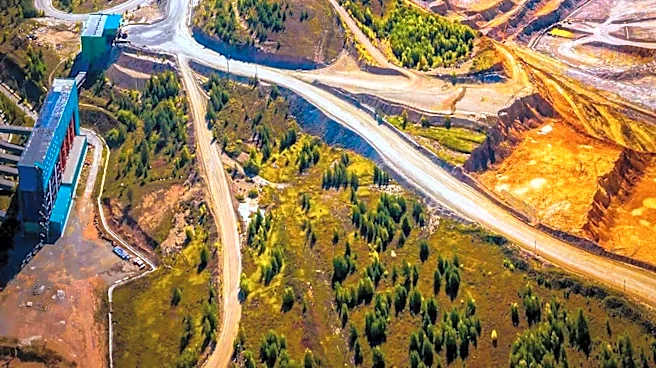
Perpetua Resources, a Boise-based mining company, has been awarded up to $40 million in funding from the U.S. Army's Defense Ordnance Technology Consortium. This funding is designated for exploring tungsten deposits at the Stibnite site in Idaho. The
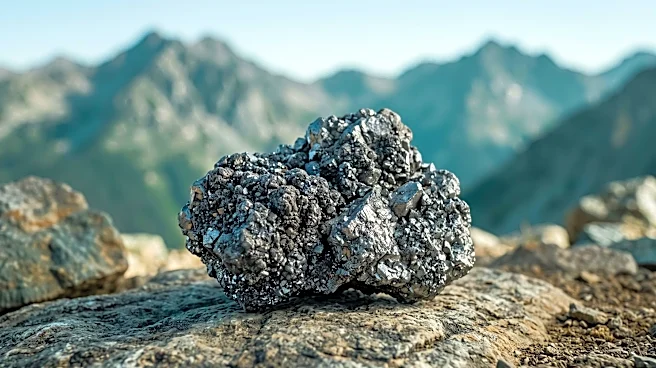
initiative aims to assess the feasibility of mining tungsten through drilling and engineering work. Perpetua Resources will match the Army's funding for this three-year exploration program, with the initial 18-month phase costing $18 million, split equally between the company and the Army. The remaining $31 million in federal funding is contingent on exploration results and progress in testing, engineering, and permitting. This latest allocation brings the total funding received by Perpetua from the U.S. Department of Defense since 2022 to $126 million, which has previously supported general permitting, engineering, and antimony processing studies. Tungsten is critical for military-grade steel, aerospace components, munitions, and ground vehicle armor, and the U.S. has not commercially mined it since 2015, relying heavily on imports, with China supplying 26% of U.S. tungsten imports from 2021 to 2024.
Why It's Important?
This U.S. Army investment in Perpetua Resources for tungsten exploration is a significant step towards bolstering domestic critical mineral supply chains and reducing reliance on foreign sources, particularly China. Tungsten's essential role in defense and industrial applications makes its secure domestic supply a national security imperative. The current dependence on imports, especially from China, poses strategic vulnerabilities for the U.S. military and manufacturing sectors. By exploring and potentially developing a high-grade tungsten source at Stibnite, the U.S. aims to enhance its self-sufficiency and mitigate geopolitical risks associated with critical mineral procurement. This move could also stimulate economic activity in Idaho through job creation and infrastructure development related to mining and processing. For Perpetua Resources, this funding not only provides capital for exploration but also validates the strategic importance of the Stibnite project, potentially paving the way for future large-scale mining operations that could include gold and antimony, further diversifying U.S. mineral production.
What's Next?
The initial 18-month phase of tungsten exploration will proceed with drilling and engineering work, funded jointly by Perpetua Resources and the U.S. Army. Subsequent phases of the $31 million federal funding will depend on the success and progress of these initial efforts. If exploration yields favorable results, Perpetua Resources will need to pursue additional permitting and environmental reviews, as the current Stibnite mining plan does not include tungsten extraction. This process could potentially extend the life of the Stibnite mine and increase its overall mineral output, including gold and antimony. The company anticipates that successful exploration could add significant reserves of gold and antimony, potentially exceeding $6 billion in value before mining costs. Construction on the Stibnite mine is already underway, with operations potentially beginning as early as 2029, and the tungsten exploration will run concurrently with planned gold and antimony exploration.
Beyond the Headlines
The U.S. Army's investment in domestic tungsten exploration reflects a broader strategic shift towards securing critical mineral independence, driven by national security concerns and economic resilience. This initiative highlights the complex interplay between defense needs, environmental considerations, and international trade dynamics. While the project aims to reduce reliance on countries like China, it also raises questions about the environmental impact of increased domestic mining, particularly in areas like Stibnite, which is near the Frank Church – River of No Return Wilderness. Opponents of the mine have expressed concerns about potential pollution of the East Fork South Fork Salmon River. The long-term success of such ventures will depend not only on the geological viability of deposits but also on navigating stringent environmental regulations and addressing community concerns, balancing economic and strategic benefits with ecological preservation.