

What's Happening?
The National Weather Service has confirmed that an EF-1 tornado touched down in Ann Arbor, Michigan, early Wednesday morning. The tornado began near the intersection of Jackson Avenue and I-94, carving a 1.7-mile-long path of destruction as it moved eastward.
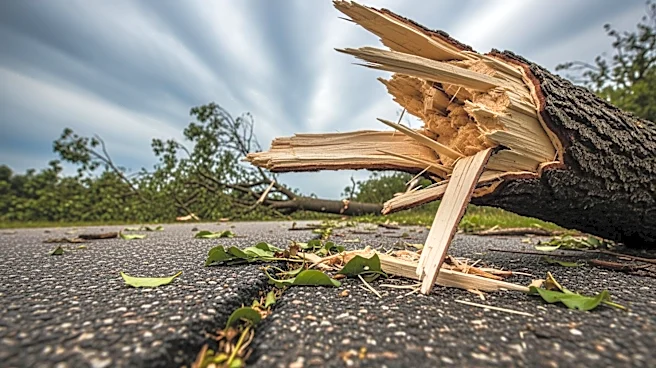
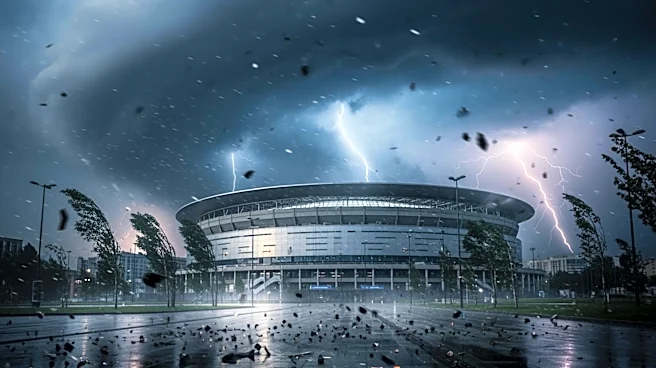
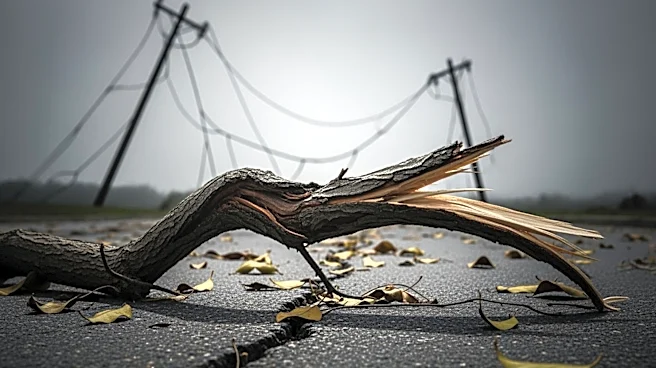
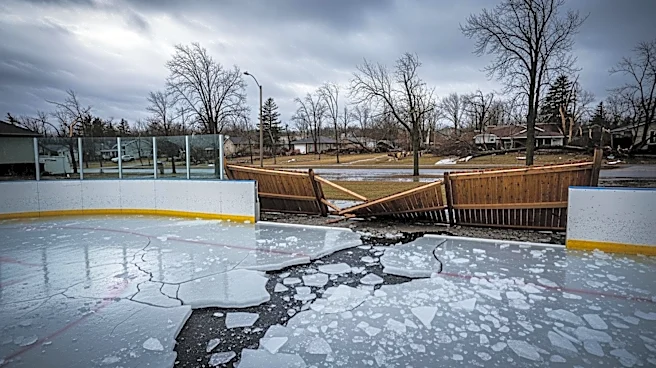
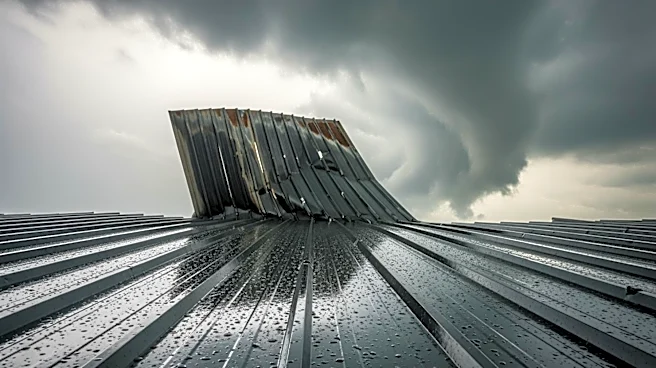
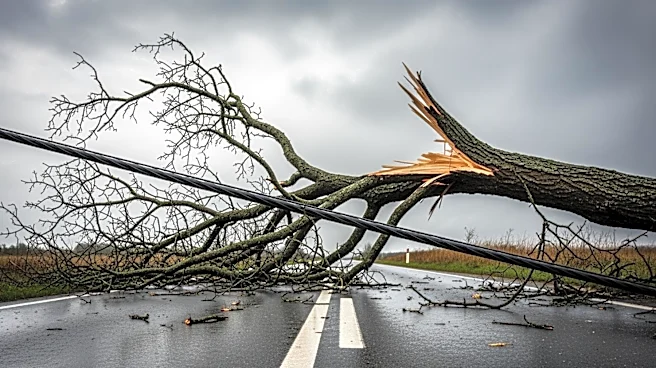
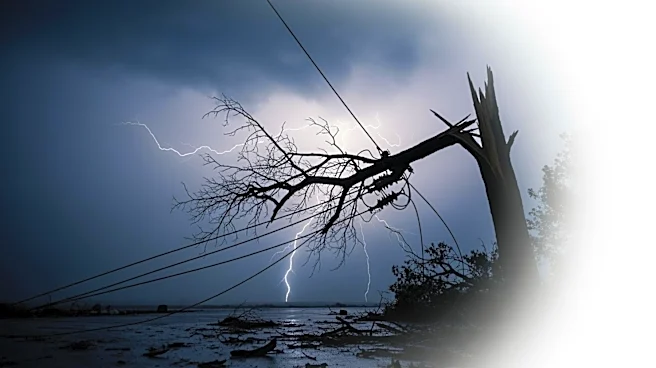
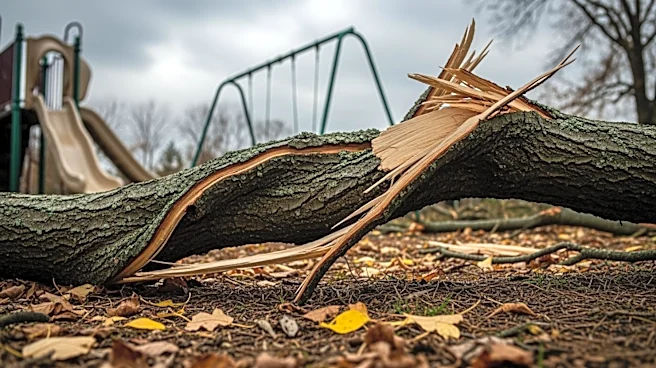
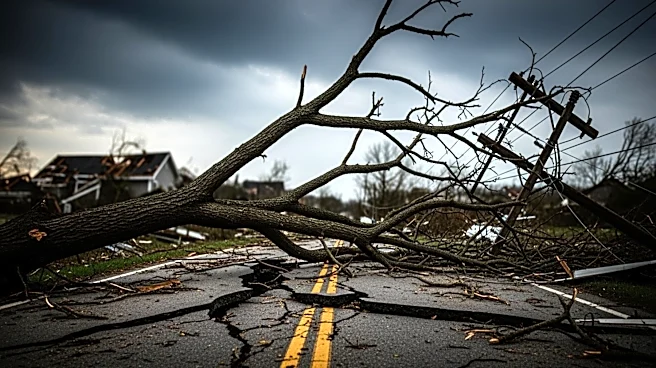
The tornado caused significant damage, including ripping the wall off the Veterans' Memorial Park Ice Arena and snapping stadium lights with winds reaching 110 miles per hour. Trees were uprooted, and the roof of a building on 4th Street was torn off as the tornado approached downtown Ann Arbor. The tornado's path ended near downtown, but straight-line winds continued to cause damage to buildings, trees, and homes, extending to the University of Michigan campus. Despite the extensive damage, no injuries were reported. The city is conducting door-to-door damage assessments, and power outages led to the closure of all Ann Arbor public schools on Wednesday, though they reopened on Thursday.
Why It's Important?
The tornado's impact on Ann Arbor highlights the vulnerability of urban areas to severe weather events. The damage to infrastructure, such as the Veterans' Memorial Park Ice Arena and the University of Michigan campus, underscores the potential for significant economic and social disruption. The widespread power outages affected daily life and education, as seen with the temporary closure of public schools. This event serves as a reminder of the importance of emergency preparedness and the need for robust infrastructure to withstand such natural disasters. The quick response by city officials and the National Weather Service in confirming the tornado and assessing damage demonstrates the critical role of coordinated emergency management in mitigating the impact of severe weather.
What's Next?
In the aftermath of the tornado, Ann Arbor city officials will continue conducting damage assessments to determine the full extent of the destruction. Residents can expect city workers to visit their homes as part of this process. The focus will likely be on restoring power to affected areas and repairing damaged infrastructure. The event may prompt discussions on improving building codes and emergency response strategies to better prepare for future severe weather events. Additionally, the community may engage in efforts to support those affected by the tornado, including potential fundraising or volunteer initiatives to assist with recovery and rebuilding efforts.