






What's Happening?
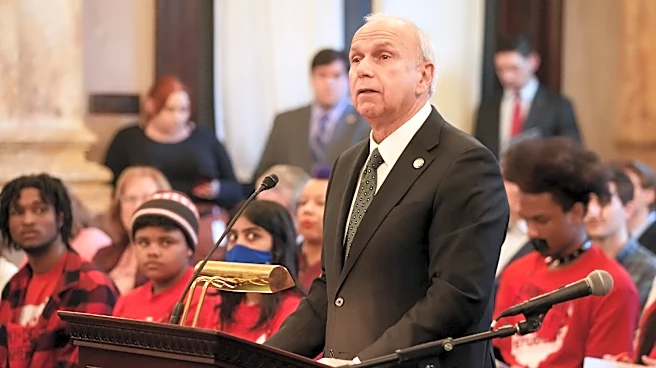
Massachusetts Secretary of State William Galvin has publicly defended the state's ballot question process, referring to it as a 'safety valve for democracy,' even as state lawmakers consider significant reforms. The House and Senate have both passed bills
aimed at expanding disclosure rules for ballot question campaigns and imposing new requirements on paid signature gathering. These legislative efforts stem from growing frustration among lawmakers regarding the process that allows citizens to bypass the Legislature to enact new laws. Currently, nine questions are slated for the November ballot, tying the record for the most in state history. Galvin emphasized the importance of citizens retaining the authority to make laws, a concept that emerged from early 20th-century reform efforts driven by a distrust of legislative bodies. House Speaker Ron Mariano, however, argues that reforms are necessary due to concerns about well-funded special interest groups using ballot initiatives to advance agendas, often leading to high-stakes litigation and judicial removal of questions.
Why It's Important?
The debate over ballot question reform in Massachusetts highlights a fundamental tension between direct democracy and representative governance. Secretary Galvin's stance underscores the historical intent of ballot initiatives as a mechanism for citizen empowerment and a check on legislative inaction or unpopular decisions. Conversely, legislative leaders like Speaker Mariano express concerns about the influence of moneyed interests and the potential for complex issues to be decided through a single up-or-down vote, bypassing the deliberative process of the legislature. The outcome of these reform efforts could significantly alter the landscape of citizen lawmaking in Massachusetts, potentially making it more difficult for grassroots movements or less-funded campaigns to get issues on the ballot. This could shift power dynamics, either by strengthening the legislature's role in lawmaking or by preserving avenues for direct public input on policy.
What's Next?
The House and Senate bills concerning ballot question reforms are currently in negotiations, and a compromise could be reached before the end of the year. This compromise may introduce changes to how initiative petitions qualify for the ballot, potentially including increased geographic signature requirements, enhanced campaign finance disclosures, restrictions on paid signature collection, and higher vote thresholds for certain ballot items. Additionally, the House bill proposes a special legislative commission to review the entire initiative petition process, with a deadline of end-2027 to recommend statutory and constitutional amendments. The Pioneer Institute, a conservative think tank, has also weighed in, recommending alternative reforms such as earlier judicial review for all questions and an extended period for signature collection, which could reduce reliance on paid signature-gathering firms. The upcoming November election, featuring a record number of diverse and complex ballot questions, will likely further fuel public and legislative discussion on the future of this process.
Beyond the Headlines
The ongoing discussion in Massachusetts about ballot question reform touches upon deeper constitutional and democratic principles. The concept of direct democracy, while intended to empower citizens, faces challenges in an era of sophisticated political campaigning and significant financial influence. The debate raises questions about the balance between ensuring broad public participation and preventing the manipulation of the process by well-resourced entities. If reforms are enacted that significantly restrict ballot access, it could lead to accusations of disenfranchisement or legislative overreach, potentially increasing public distrust in government. Conversely, if the process remains largely unchanged, concerns about special interest influence and the complexity of ballot measures could persist. The legal challenges surrounding ballot questions, such as those that led to the removal of rent control, stipend reform, and income tax cut measures, highlight the intricate legal framework and the critical role of judicial review in this form of lawmaking.