


What's Happening?
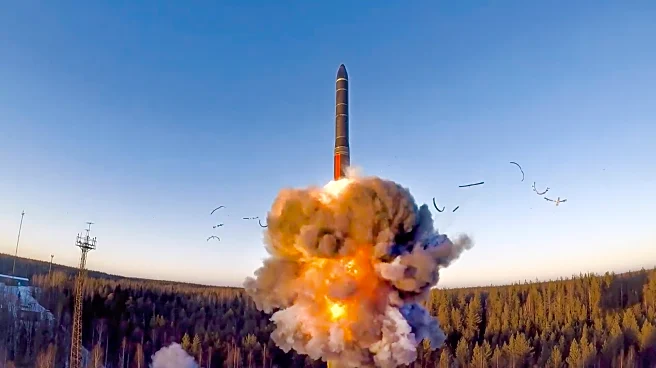
President Donald Trump has been presented with a range of new military options against Iran, as reported by senior U.S. officials. These options aim to further damage Iran's nuclear and missile capabilities or weaken the position of Iran's supreme leader,
Ayatollah Ali Khamenei. The Pentagon's proposals include potential U.S. commando raids on Iranian targets, although no military action has been authorized by Trump. The U.S. military buildup in the Middle East continues, with the deployment of the aircraft carrier USS Abraham Lincoln. Trump remains open to diplomatic solutions, using the threat of military action to pressure Iran into negotiations.
Why It's Important?
The presentation of military options to President Trump underscores the ongoing tensions between the U.S. and Iran, particularly concerning Iran's nuclear ambitions and regional influence. The potential for military action could have significant implications for U.S. foreign policy and stability in the Middle East. A military conflict with Iran could disrupt global oil markets, impact international relations, and lead to broader regional instability. The situation also highlights the delicate balance between military readiness and diplomatic engagement in addressing international security threats.
What's Next?
While no military action has been authorized, the U.S. continues to maintain a significant military presence in the region. The potential for diplomatic negotiations remains, as Trump has not ruled out a peaceful resolution. The international community, including allies and regional partners, will likely monitor the situation closely, as any escalation could have far-reaching consequences. The U.S. administration's approach to Iran may also influence its relationships with other countries in the region, including Israel and Saudi Arabia.