




What's Happening?
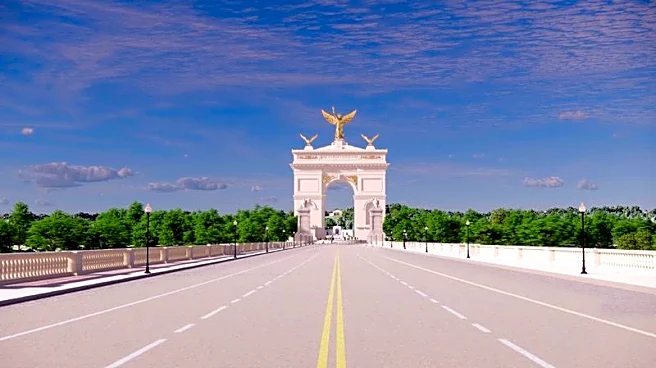
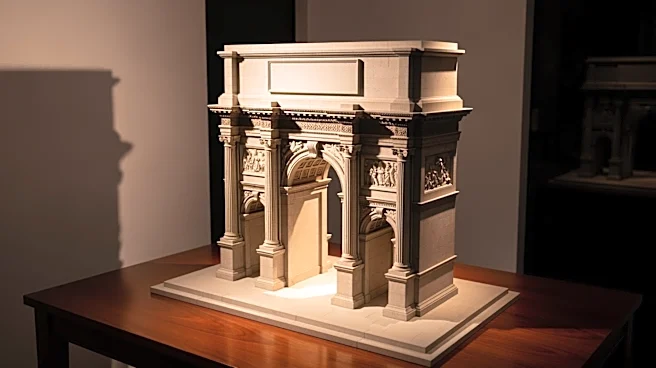
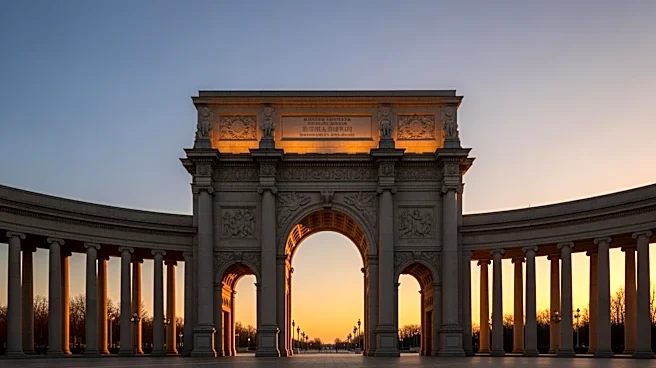
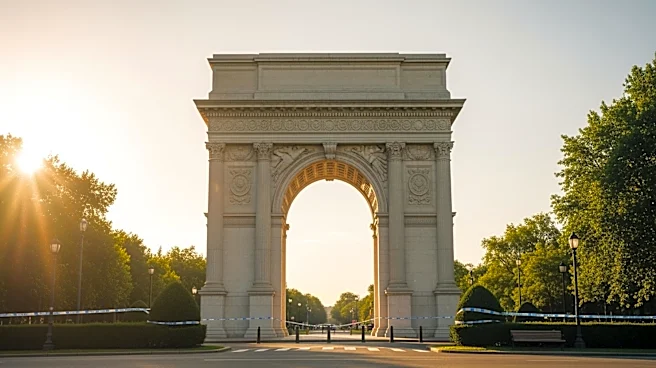
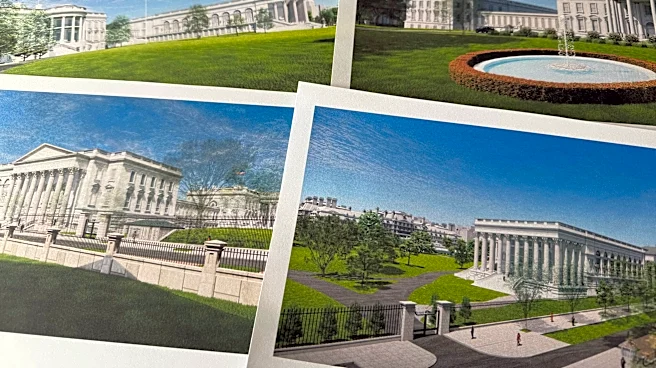
President Trump has unveiled architectural renderings for a triumphal arch to be added to the National Mall in Washington, D.C. The proposed monument, designed by Harrison Design, is intended to stand at one end of the Arlington Memorial Bridge next to Arlington National Cemetery.
The arch, which resembles the Arc de Triomphe in Paris but is taller, is part of a series of architectural projects initiated by the Trump administration. The White House has stated that the arch will serve as a tribute to America's 250th birthday and honor the sacrifices of American veterans. However, the project has faced legal challenges from Vietnam War veterans who argue it violates statutes requiring congressional authorization for commemorative works on federal park grounds.
Why It's Important?
The triumphal arch project is significant as it reflects President Trump's ongoing efforts to reshape the architectural landscape of Washington, D.C. The monument is intended to enhance the visitor experience at Arlington National Cemetery and serve as a visual reminder of American history and sacrifices. However, the legal challenges highlight concerns about presidential authority and the need for congressional approval for such projects. The outcome of these legal disputes could set precedents for future presidential initiatives involving federal property and commemorative structures.
What's Next?
The White House plans to follow legal requirements in constructing the arch, with the National Park Service presenting potential designs to the Commission on Fine Arts. The commission, composed of members appointed by Trump, is scheduled to review the plans next week. The National Capital Planning Commission is also expected to weigh in. The legal challenges may delay the project, as the administration faces opposition from groups advocating for historic preservation and congressional oversight.
Beyond the Headlines
The triumphal arch project raises questions about the balance of power between the executive branch and Congress in determining the use of federal property. It also reflects broader cultural debates about the role of monuments in public spaces and how they represent national identity and history. The project's resemblance to the Arc de Triomphe and its symbolic elements may provoke discussions about American exceptionalism and the influence of foreign architectural styles on U.S. landmarks.