







What's Happening?
New research published in 'Trends in Ecology and Evolution' indicates that increasingly dry conditions globally are contributing to a rise in certain infectious diseases, including cholera, West Nile virus, and dengue. This phenomenon, termed the 'drought-disease
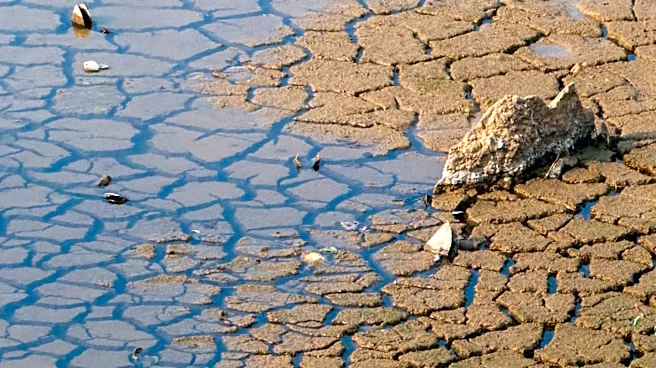
paradox,' suggests that while drought can reduce some disease threats by eliminating water sources, it can also create environments where other pathogens thrive. The study, which analyzed nearly 100 research papers, found that dry conditions can lead to changes in water quality, shifts in mosquito activity, and altered animal movements, all of which can facilitate disease transmission. For example, Somalia's 2017 drought coincided with nearly 80,000 cholera cases, and California's 2014 'superdrought' was linked to a significant increase in West Nile virus cases. The research highlights that infectious disease studies have historically focused more on heat than on drought, despite the world becoming 77% drier in the last three decades, according to a United Nations report.
Why It's Important?
This research is important for U.S. public health and environmental policy as it redefines how drought should be perceived—not just as a water shortage issue, but as a significant public health concern. The findings suggest that drought planning needs to integrate disease prevention strategies alongside water conservation efforts. For regions in the U.S. prone to drought, such as California and the Southwest, this means a heightened awareness of potential outbreaks of diseases like West Nile virus and dengue. Public health agencies may need to adjust surveillance and response protocols to account for the 'weather whiplash' phenomenon, where dry periods are followed by wet ones, potentially exacerbating disease risks. Understanding this paradox can lead to more effective resource allocation for disease monitoring, water management, and public health campaigns, ultimately protecting communities from unexpected health crises linked to climate patterns.
What's Next?
Scientists recommend improved satellite monitoring to track shifts in water across landscapes, which could help anticipate areas where disease risks may rise. Water management decisions, such as building dams or expanding irrigation, will need to be carefully evaluated for their potential impact on disease ecology. Drought planning will likely incorporate more comprehensive disease prevention measures, including closer attention to changing mosquito activity, water quality concerns, and the health effects of dust following dry periods. This could lead to policy changes in how water resources are managed and how public health initiatives are funded and implemented in drought-prone areas. Researchers and policymakers will need to collaborate to develop integrated strategies that address both water scarcity and the associated health risks, potentially leading to new interdisciplinary approaches in environmental and public health management.
Beyond the Headlines
The 'drought-disease paradox' reveals a complex and often counterintuitive relationship between climate and public health, challenging conventional assumptions that water-borne diseases only thrive with abundant water. This deeper implication suggests that climate change, by altering precipitation patterns and increasing drought frequency, could fundamentally reshape the landscape of infectious disease epidemiology. It highlights the interconnectedness of environmental health and human health, urging a more holistic approach to climate adaptation and mitigation. The ethical dimension arises in ensuring equitable access to clean water and sanitation, especially in communities most vulnerable to drought-induced disease outbreaks. Furthermore, it underscores the need for interdisciplinary research and policy-making that integrates climatology, ecology, and public health to anticipate and respond to emerging health threats in a rapidly changing world.