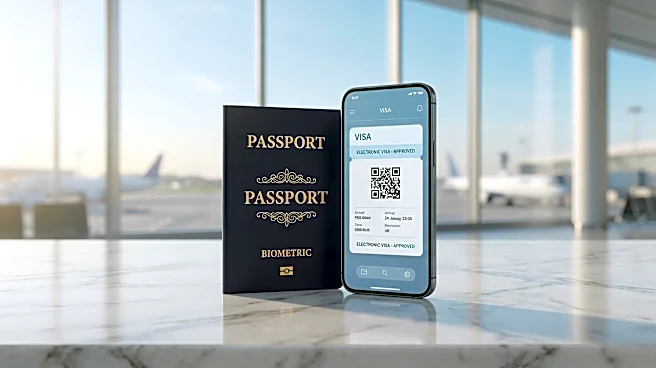









What's Happening?
The International Air Transport Association (IATA) released its 2026 Global Passenger Survey, based on over 10,000 responses from passengers across more than 200 countries. The survey indicates a growing adoption of airport biometrics, with 58% of passengers having
used them in the past year, and 87% expressing satisfaction. A significant 84% of passengers would use a digital passport for online check-in, and 82% would share it with airlines when booking. Furthermore, 78% are willing to share biometric information to bypass showing a physical passport or boarding pass. However, this enthusiasm is tempered by concerns regarding data privacy, with 59% fearing data breaches and 49% worried about their information being shared with other organizations. Transparency in data handling is also a concern for 41% of respondents. IATA emphasizes the need for governments to establish a common framework for secure digital passports to facilitate widespread adoption.
Why It's Important?
The survey highlights a clear demand for streamlined travel processes through digital identification, which could significantly transform the aviation industry. For airlines and airports, the widespread adoption of digital passports and biometrics promises increased efficiency, reduced wait times, and enhanced passenger experience. This shift could lead to substantial operational cost savings and improved security measures. However, the success of this transition hinges on addressing passenger concerns about data security and privacy. Failure to build trust in data protection could hinder adoption rates and lead to regulatory challenges. The call for a common international framework for digital passports underscores the need for global cooperation to ensure interoperability and consistent security standards, impacting how U.S. travelers interact with international travel systems and how U.S. airlines integrate these technologies.
What's Next?
IATA is advocating for governments to agree on a common framework for issuing and accepting secure digital passports, or Digital Travel Credentials (DTCs), to enable interoperability across borders. The organization's 'One ID' initiative aims to create a continuous identity system where passengers register once and are recognized throughout their journey. This model relies on verifiable credentials, where trusted issuers like governments or airlines sign credentials stored by passengers, with touchpoints verifying validity without full re-checks. Future developments will likely focus on implementing robust data protection measures, such as selective disclosure where passengers share only necessary data, and ensuring traceability to explain data usage. The industry will need to adapt to varying regulatory environments, such as the European Union's stance on facial recognition, while continuing to innovate in fraud prevention and secure identity management.
Beyond the Headlines
The push for digital passports and biometrics in air travel extends beyond mere convenience, touching upon fundamental issues of digital identity, privacy, and international governance. The concept of a 'reusable identity' raises questions about individual control over personal data in an increasingly interconnected world. The tension between the desire for seamless travel and the fear of data breaches highlights a broader societal challenge in the digital age: how to leverage technological advancements while safeguarding individual rights. The development of interoperable digital travel credentials could set precedents for other sectors requiring secure and verifiable digital identities, potentially influencing future digital identity frameworks in areas like healthcare or finance. The success of this initiative will depend not only on technological solutions but also on establishing robust legal and ethical guidelines that foster public trust and ensure equitable access.