
What's Happening?
Researchers from INTA and Conicet have developed Biopellet, a pelletized biofertilizer designed to promote regenerative agriculture. This innovation is made from local compost and operates under a circular
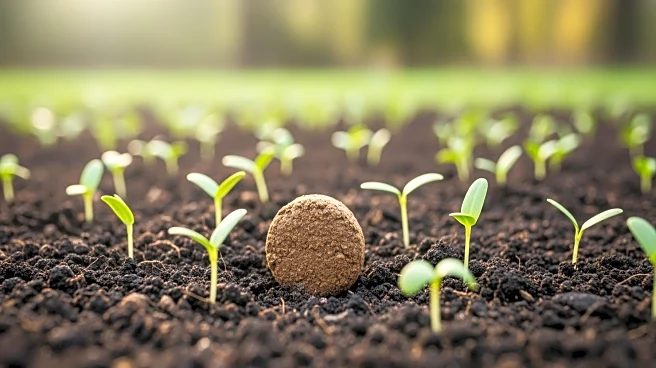
economy model, offering a practical and economical solution to improve soil fertility. Biopellet has been validated in field trials with various crops, including tomatoes, vines, forage, and vegetables. It contains organic matter, essential nutrients, and beneficial microorganisms that enhance soil structure, nutrient availability, and crop productivity. The pelletized format of Biopellet facilitates transport, storage, and application, ensuring a homogeneous distribution in the field. This development is part of a broader effort to transform agro-industrial waste into strategic inputs, promoting local employment and boosting the competitiveness of producers.
Why It's Important?
The introduction of Biopellet is significant for the agricultural sector, particularly in regions like Cuyo, where soil management is a critical challenge. By providing an alternative to raw manure and chemical fertilizers, Biopellet supports sustainable farming practices and enhances soil health. The circular economy model used in its production not only addresses environmental concerns by reducing waste but also creates economic opportunities through local employment. The scalability of Biopellet's production could potentially impact regional and international markets, making it a valuable tool for advancing regenerative agriculture. This innovation aligns with global efforts to promote sustainable agricultural practices and reduce the environmental footprint of farming.
What's Next?
The project aims to scale up Biopellet production through a high-capacity plant capable of supplying local, regional, and international markets. This expansion could lead to broader adoption of regenerative agricultural practices, further enhancing soil fertility and sustainability. As Biopellet gains traction, it may influence policy decisions and encourage investment in similar sustainable agricultural technologies. The success of this initiative could serve as a model for other regions seeking to implement circular economy principles in agriculture.
Beyond the Headlines
Biopellet represents a shift towards more sustainable agricultural practices, emphasizing the importance of integrating scientific research with practical applications. This development highlights the potential for innovative solutions to address environmental and economic challenges in agriculture. By transforming waste into valuable resources, Biopellet contributes to a more sustainable and resilient agricultural system, potentially influencing future agricultural policies and practices.