






What's Happening?
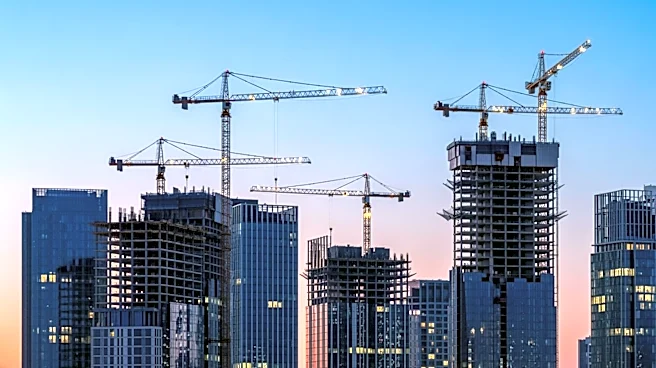
A recent analysis by Realtor.com reveals that newly constructed homes in urban areas across the United States are significantly more expensive than existing homes, exacerbating affordability issues. The report highlights that only 10% of new-construction
homes are located in urban areas, compared to 30% of existing homes. This scarcity is driving up prices, with the median listing price for new urban homes reaching over $738,000, a 78.4% premium over existing homes. Miami stands out with a 300% premium for new urban homes, where the median price exceeds $2.57 million. Other cities like North Port-Bradenton, Tampa-St. Petersburg, and St. Louis also show high premiums. The report suggests that the limited supply and high demand are creating a structural deficit in the housing market.
Why It's Important?
The significant price premiums for new urban homes highlight a critical issue in the U.S. housing market: the tension between demand and affordability. As urban areas face limited development opportunities and rising construction costs, the gap between new and existing home prices widens, making it difficult for many to afford urban living. This situation pressures policymakers to consider reforms that encourage denser residential development and reduce regulatory barriers. Such measures could help alleviate the affordability crisis by increasing housing supply. The report also notes that infill housing projects could boost property tax revenues, providing financial benefits to cities.
What's Next?
In response to the affordability challenges, more than a dozen states are considering or have enacted legislation to ease restrictions on smaller homes and infill projects. These reforms aim to reduce minimum lot-size requirements and setback rules, potentially increasing urban housing supply. At the federal level, Congress is debating broader housing legislation to address regulatory hurdles. As urban land constraints persist, demand for infill development and higher-density construction is expected to remain a focus for builders and policymakers. These efforts could gradually improve housing affordability and availability in urban areas.
Beyond the Headlines
The rising cost of urban new-construction homes underscores the need for innovative housing solutions. As cities grapple with limited space and high demand, 'light-touch density' strategies are gaining traction. These approaches involve modest increases in housing density without drastically altering neighborhood character. Additionally, the focus on infill development could lead to more sustainable urban growth, reducing sprawl and preserving green spaces. The shift towards higher-density housing may also influence cultural and lifestyle changes, as more people adapt to living in compact urban environments.