





What's Happening?
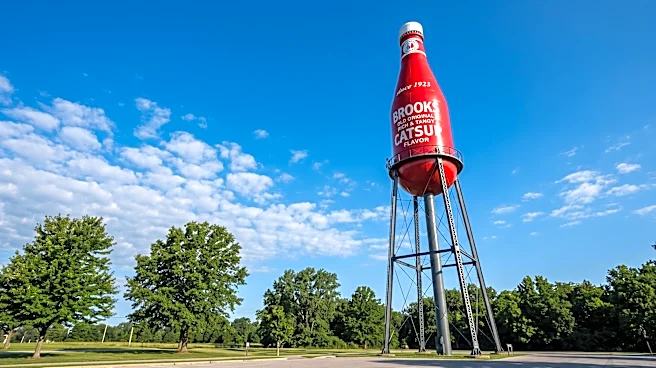
The iconic 70-foot catsup bottle, perched on a 100-foot stand in Collinsville, Illinois, is drawing travelers as Route 66 celebrates its 100th anniversary. This landmark, originally built in 1949 as a water tower for the Brooks Catsup factory, holds 100,000
gallons of water. By the early 1960s, the bottling operation moved to Indiana, and by 1993, the bottle had fallen into significant disrepair, facing potential demolition. However, the Catsup Bottle Preservation Group was formed, raising funds to restore the structure in 1995. In 2002, it was listed on the National Register of Historic Places and later inducted into the Illinois Route 66 Hall of Fame. Mike Gassmann, known as the 'Big Tomato' within the bottle's fan club, notes that the landmark continues to attract a steady stream of visitors.
Why It's Important?
The preservation and continued popularity of the Giant Catsup Bottle highlight the cultural and historical significance of roadside attractions along historic routes like Route 66. These landmarks serve as tangible links to America's past, particularly the mid-20th century era of automobile travel and industrial development. Its inclusion on the National Register of Historic Places underscores the importance of preserving unique architectural and cultural heritage. For local communities like Collinsville, such attractions can be vital for tourism, drawing visitors who contribute to the local economy. The story of its restoration by a community group also exemplifies the power of grassroots efforts in preserving historical sites, demonstrating how local engagement can prevent the loss of unique cultural assets.
What's Next?
As Route 66 continues its centennial celebrations, the Giant Catsup Bottle is expected to remain a prominent attraction, drawing increased numbers of tourists and history enthusiasts. Efforts by organizations like the World’s Largest Catsup Bottle Inc. will likely continue to promote the landmark and its history. The ongoing interest in Route 66, particularly during its centennial, could lead to further recognition and preservation initiatives for other historic sites along the route. Local businesses in Collinsville may experience a boost in tourism-related revenue as visitors stop to photograph and learn about the iconic bottle. The landmark's continued visibility could also inspire other communities to preserve their unique historical structures.
Beyond the Headlines
The Giant Catsup Bottle transcends its function as a mere water tower, becoming a symbol of American ingenuity, quirky roadside Americana, and community resilience. Its survival against demolition and subsequent restoration reflects a broader societal appreciation for the eccentric and the historical. This landmark, like many along Route 66, embodies a sense of nostalgia for a bygone era of travel and local industry. It also raises questions about what constitutes 'historic' and 'culturally significant' architecture, often challenging conventional notions of beauty and utility. The 'Big Tomato' title held by Mike Gassmann further illustrates the playful and passionate engagement that such unique landmarks can inspire, fostering a sense of local identity and pride.