


What's Happening?
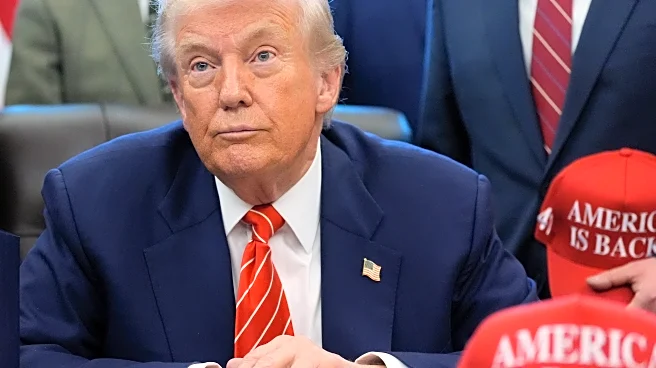
The United States and India have announced a new framework for a trade deal that involves significant tariff adjustments on agricultural products. Under this agreement, the US will reduce tariffs on Indian goods from 50% to 18%, while India will eliminate
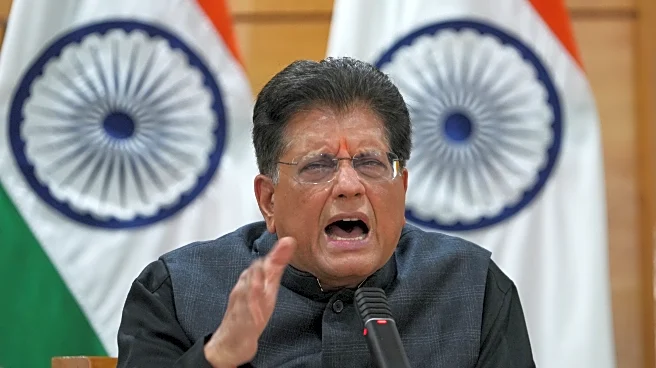
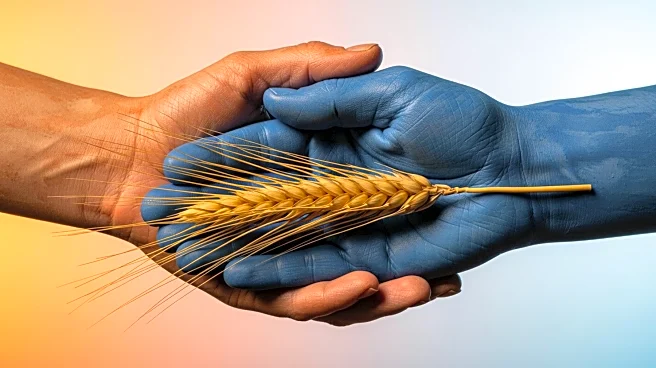
or reduce duties on selected American food and agricultural products. This includes items such as dried distillers' grains, red sorghum, tree nuts, and soybean oil. The deal is seen as a move to deepen economic ties between the two nations, with US Trade Representative Jamieson Greer highlighting the creation of new opportunities for farmers and entrepreneurs in both countries. However, the Indian government, led by Prime Minister Narendra Modi, has emphasized that no concessions will be made on sensitive agricultural and dairy products to protect the livelihoods of small and marginal farmers.
Why It's Important?
This trade agreement is significant as it represents a strategic economic partnership between two of the world's largest economies. For the US, the reduction in tariffs on Indian goods could enhance market access for American agricultural products, potentially boosting exports and benefiting American farmers. For India, the agreement aims to protect its sensitive agricultural sectors while securing preferential access for its goods in the US market. The deal also reflects India's commitment to safeguarding its farmers' interests, which is crucial given the large population dependent on agriculture for their livelihood. The agreement could lead to increased bilateral trade, contributing to economic growth in both countries.
What's Next?
The next steps involve the implementation of the tariff adjustments and monitoring compliance with the agreement's terms. The US will be observing India's oil imports, particularly from Russia, as part of the deal's conditions. Any breach could result in the reinstatement of a 25% tariff penalty. Both countries will likely continue negotiations to finalize the details of the agreement, with potential impacts on future trade policies and economic relations. Stakeholders, including political leaders and industry groups, will be closely watching the developments to assess the agreement's impact on domestic markets and international trade dynamics.
Beyond the Headlines
The trade deal highlights the complexities of international trade negotiations, where economic interests must be balanced with domestic policy priorities. For India, protecting its agricultural sector is crucial due to the socio-economic implications for millions of farmers. The agreement also underscores the geopolitical considerations in trade relations, as the US seeks to strengthen ties with India amid global economic shifts. The monitoring of India's oil imports from Russia adds a layer of geopolitical strategy, reflecting broader international relations dynamics. This deal could set a precedent for future trade agreements, influencing global trade patterns and economic alliances.