



What's Happening?
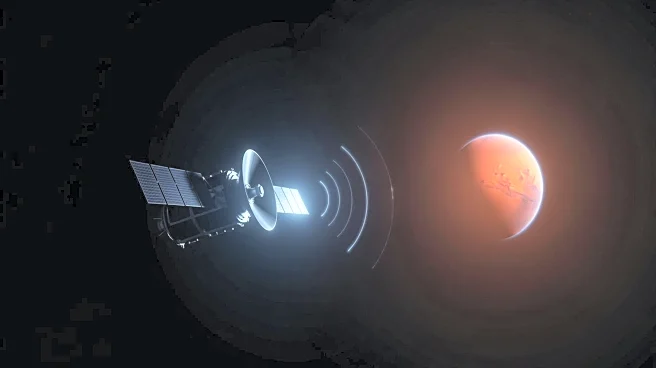
NASA has lost contact with the MAVEN Mars orbiter, a critical component of its Mars exploration program, as of December 6, 2025. The spacecraft, which has been in orbit since 2014, unexpectedly fell silent during a routine orbit when it slipped behind
Mars. Despite attempts to re-establish communication, the orbiter remains unresponsive. MAVEN has been instrumental in studying the Martian atmosphere and supporting communications for surface missions. The loss of contact raises concerns about the resilience of NASA's aging Mars communications network and the potential impact on future missions, including plans to return Martian rock samples to Earth.
Why It's Important?
The loss of MAVEN could significantly impact NASA's Mars exploration efforts. As a key node in the interplanetary communication network, MAVEN's silence reduces redundancy and data capacity, potentially affecting the operations of rovers like Curiosity and Perseverance. This situation underscores the need for a robust relay network to support long-term missions such as Mars Sample Return. The incident highlights the challenges of relying on aging spacecraft and may accelerate efforts to develop new Mars telecommunications infrastructure. The scientific data collected by MAVEN over the years has been crucial in understanding Mars' atmospheric evolution, making its potential loss a setback for planetary science.
What's Next?
NASA is continuing efforts to re-establish contact with MAVEN, using the Deep Space Network to attempt communication. If contact cannot be restored, NASA may need to adjust operations for current Mars missions to compensate for the loss of MAVEN's relay capabilities. The situation may prompt NASA to expedite plans for new Mars orbiters with enhanced communication features. Additionally, international collaboration with agencies like the European Space Agency could become more critical to maintain a reliable communication network for Mars exploration.