








What's Happening?
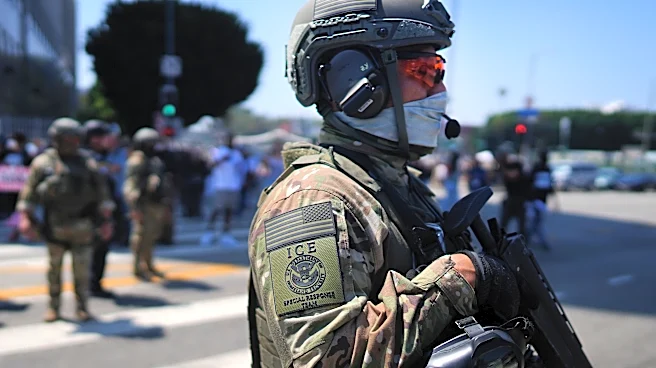
U.S. Immigration and Customs Enforcement (ICE) has announced plans to equip every field officer and agent with body cameras by the end of August. This initiative aims to provide a comprehensive visual record of immigration enforcement operations. However,
the release of footage to the public remains at the discretion of ICE. The agency's body-worn camera policy has faced scrutiny, particularly regarding provisions that allow ICE leadership to withhold or delay footage after incidents involving serious injuries or deaths in custody. Acting Director David J. Venturella defended the policy, stating that the restrictions are meant to protect investigations and privacy, aligning with federal law and other law enforcement agencies' policies. The policy includes a provision for expedited release of footage when it serves the agency's best interests, though this has been criticized for potentially limiting transparency.
Why It's Important?
The implementation of body cameras for ICE officers is significant as it could enhance transparency and accountability in immigration enforcement. However, the discretion ICE holds over the release of footage raises concerns about the potential for selective transparency. This development is crucial for public trust, especially in light of recent incidents involving ICE officers that were not recorded. The policy's impact on privacy and investigation integrity is also a point of contention. The broader implications for law enforcement practices and public perception of immigration enforcement are substantial, as stakeholders, including civil rights groups, may push for more stringent transparency measures.
What's Next?
As ICE moves forward with equipping officers with body cameras, the agency may face increased pressure from advocacy groups and lawmakers to ensure that footage is released in a timely and transparent manner. The policy's implementation and its effects on public trust and accountability will likely be closely monitored. Future incidents involving ICE officers could test the agency's commitment to transparency and the effectiveness of the body camera policy. Additionally, there may be calls for legislative or policy changes to address concerns about footage release and privacy protections.