


What's Happening?
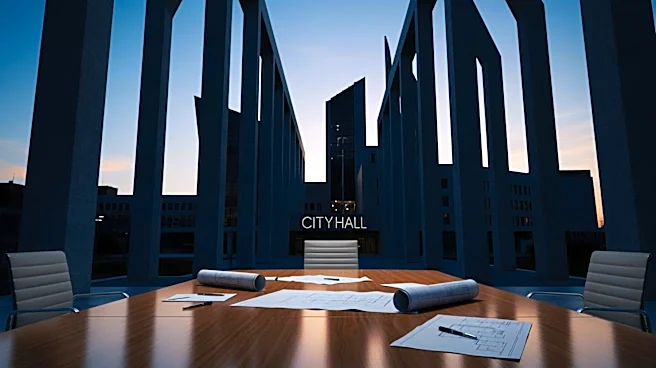
Dallas Deputy Mayor Pro Tem Gay Donnell Willis has defended City Manager Kimberly Bizor Tolbert following a controversy regarding the future of the city's iconic City Hall, designed by architect I.M. Pei. The issue arose after Mavericks' CEO Rick Welts
revealed that Tolbert had discussed moving out of City Hall due to financial constraints. This conversation, which took place over a year ago, has sparked debate among council members. Some, like Adam Bazaldua, expressed outrage over Tolbert's actions, claiming she acted without council approval. The cost to repair City Hall is estimated at $329 million, while modernization could reach $1 billion. The council voted 9 to 6 to gather more information on the costs and potential private development of the site.
Why It's Important?
The debate over Dallas City Hall's future is significant as it involves substantial financial implications and potential changes to the city's landscape. The decision could affect taxpayers, local businesses, and the city's cultural heritage. The controversy highlights the tension between maintaining historical sites and adapting to modern needs. The outcome could influence urban development in Dallas, impacting the local economy and community dynamics. The Mavericks' interest in the site adds another layer, as their decision on a new arena location could affect downtown Dallas's vibrancy and economic activity.
What's Next?
The Dallas City Council will continue to explore options for City Hall, including potential relocation and private development. Further cost assessments and stakeholder discussions are expected. The Mavericks will also decide on their new arena location by July, which could influence the council's decision. The council's actions will be closely watched by local businesses and residents, as the decision could reshape downtown Dallas's future.
Beyond the Headlines
The controversy raises questions about transparency and governance in city planning. It underscores the challenges cities face in balancing historical preservation with economic development. The debate may prompt discussions on how cities can better manage public assets and engage with stakeholders in decision-making processes. The situation also highlights the role of sports franchises in urban development and their influence on city planning decisions.