



What's Happening?
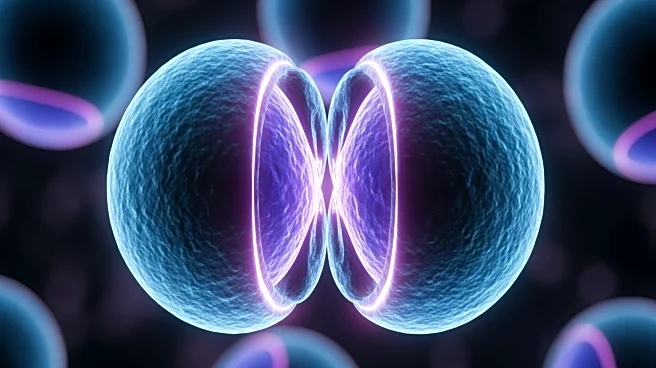
Researchers at the Ruđer Bošković Institute in Croatia have discovered a new function for the protein CENP-E, which plays a crucial role in cell division. Previously thought to act as a motor pulling chromosomes into position, CENP-E is now understood
to stabilize initial connections between chromosomes and the cell's internal tracks. This finding challenges two decades of accepted scientific understanding and has significant implications for understanding errors in chromosome attachment, which are linked to various cancers and genetic disorders. The research highlights the importance of early chromosome positioning in ensuring accurate cell division.
Why It's Important?
This discovery has the potential to revolutionize the understanding of cell division, a fundamental biological process. Errors in chromosome segregation are a hallmark of cancer, and understanding the role of CENP-E in stabilizing chromosome attachments could lead to new diagnostic and therapeutic approaches. By identifying a mechanism that directly links to disease, researchers can explore targeted interventions to correct or slow down dangerous cell divisions. This breakthrough underscores the importance of revisiting established scientific models and the potential for new insights to drive advancements in medical research and treatment.
Beyond the Headlines
The research not only challenges existing scientific paradigms but also highlights the interconnectedness of cellular processes. By linking CENP-E's role to Aurora kinase activity, the study provides a more comprehensive understanding of the regulatory mechanisms governing cell division. This insight could inform the development of new cancer therapies that target specific stages of cell division. Additionally, the research exemplifies the collaborative nature of modern science, with contributions from advanced computing and international partnerships. The findings emphasize the need for continued exploration of cellular mechanisms to uncover hidden strategies that maintain biological order.