





What's Happening?
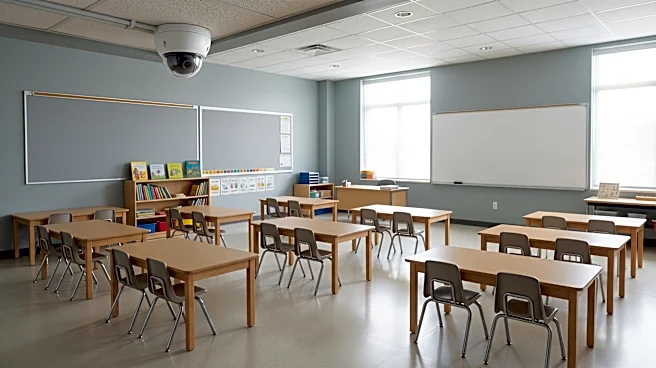
Parents in California's Central Valley are advocating for a new state law that would mandate the installation of cameras in special education classrooms. This push comes after multiple allegations of abuse against teachers in districts like Bakersfield
City School District and Visalia Unified School District. Online petitions supporting the measure have garnered significant traction, with over 12,800 signatures in Bakersfield and more than 2,700 in Visalia. Brittney Camacho, a mother whose non-verbal children were allegedly abused by their kindergarten teacher, Lacie Ann Horsting, in Visalia, emphasized the critical need for cameras, stating that children who cannot communicate are vulnerable. Although charges were filed against Horsting, the case was dismissed due to the expiration of the one-year statute of limitations. Ashley Hopwood, another mother of non-verbal special needs children, initiated a petition in Bakersfield, highlighting that cameras would provide crucial monitoring and serve as an educational tool for teachers. A 1976 California law currently prohibits recording devices in classrooms without teacher and principal consent, posing a significant obstacle to these efforts.
Why It's Important?
The demand for mandatory cameras in special education classrooms underscores a critical concern for the safety and well-being of vulnerable students who may be unable to report abuse. For non-verbal or communication-impaired children, cameras could provide an objective record of classroom interactions, offering accountability and transparency that is currently lacking. This initiative highlights a systemic issue where the lack of direct oversight can leave children at heightened risk of neglect or abuse. The current legal framework, specifically the 1976 California law, creates a barrier to implementing these protective measures, pitting parental concerns for child safety against existing privacy and consent regulations for educators. The outcome of this advocacy could significantly impact how special education environments are monitored across California, potentially setting a precedent for other states grappling with similar issues. It also brings to the forefront the debate over teacher privacy versus student protection, particularly for those with disabilities.
What's Next?
For mandatory cameras to be installed in special education classrooms across California, the state Legislature would need to enact a new law, effectively overriding or amending the existing 1976 prohibition on recording devices without consent. Parents and advocates will likely continue to lobby state lawmakers, presenting their petitions and personal testimonies to build support for such legislation. The California Teachers Association (CTA) has previously used the 1976 law to argue against mandatory online instruction, though a CTA board member stated the union has no official position on cameras in special education classrooms. This indicates that any legislative effort could face opposition or require careful negotiation with teachers' unions regarding privacy and working conditions. The debate will likely involve discussions on funding for camera installation and maintenance, data storage, access protocols, and the specific circumstances under which recordings can be reviewed. The success of this movement will depend on sustained parental advocacy and the willingness of legislators to prioritize student safety through new legal frameworks.
Beyond the Headlines
The push for cameras in special education classrooms extends beyond immediate safety concerns, touching upon broader themes of disability rights, institutional accountability, and the evolving role of technology in oversight. Ethically, it raises questions about the balance between the privacy of educators and the protection of children who cannot advocate for themselves. Legally, it challenges existing frameworks designed for general education settings when applied to the unique vulnerabilities of special education students. Culturally, it reflects a growing demand for transparency in institutions that care for vulnerable populations, driven by increased awareness and advocacy for individuals with disabilities. If enacted, such a law could lead to a significant shift in how special education is conducted, potentially fostering greater trust between parents and schools, but also raising concerns about surveillance and its impact on the teaching profession. The long-term implications could include a re-evaluation of teacher training, classroom management techniques, and the development of best practices for using video evidence in educational and legal contexts.