






What's Happening?
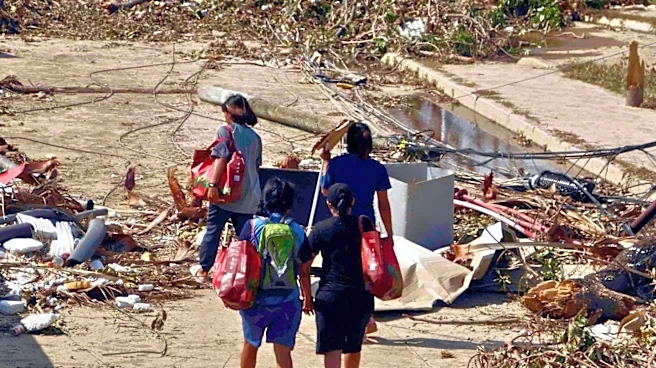
The island of Rota in the Commonwealth of Northern Mariana Islands has been severely impacted by Super Typhoon Bavi, which struck with category 5 intensity. The typhoon brought winds of up to 180 miles per hour, causing significant damage to the island's
infrastructure. Residents are facing dire conditions, particularly concerning access to drinking water, although a main water pipeline has been repaired with the help of the U.S. military. The island, which was also affected by Super Typhoon Sinlaku three months prior, is struggling to recover as many homes remain without power. The local infrastructure, including power plants and grocery stores, has been hard hit, and the community is working on emergency recovery efforts.
Why It's Important?
The devastation caused by Super Typhoon Bavi highlights the vulnerability of small island communities to extreme weather events, which are becoming more frequent and intense due to climate change. The damage to Rota's infrastructure poses significant challenges for recovery and underscores the need for sustainable rebuilding efforts. The situation also raises questions about the role of federal assistance in helping these communities not only recover but also build resilience against future storms. The impact on Rota's tourism-dependent economy could be long-lasting, affecting livelihoods and prompting discussions on how to create a more sustainable and resilient infrastructure.
What's Next?
In the aftermath of the typhoon, there is a pressing need for immediate relief efforts to restore essential services such as water and power. However, the focus is also shifting towards long-term solutions to enhance the island's resilience to future storms. This includes discussions on sustainable infrastructure development and potential federal government assistance to support these initiatives. The community is looking for ways to rebuild in a manner that can withstand future super typhoons, ensuring that temporary fixes are replaced with durable solutions. The recovery process will require collaboration between local authorities, federal agencies, and international organizations.
Beyond the Headlines
The situation in Rota serves as a stark reminder of the broader implications of climate change on vulnerable communities. The increasing frequency and intensity of such storms necessitate a paradigm shift in how disaster preparedness and recovery are approached. There is a growing recognition of the need for sustainable development practices that prioritize resilience and adaptability. The challenges faced by Rota could serve as a case study for other island nations and regions prone to similar climate-related disasters, highlighting the importance of integrating climate resilience into infrastructure planning and community development.