







What's Happening?
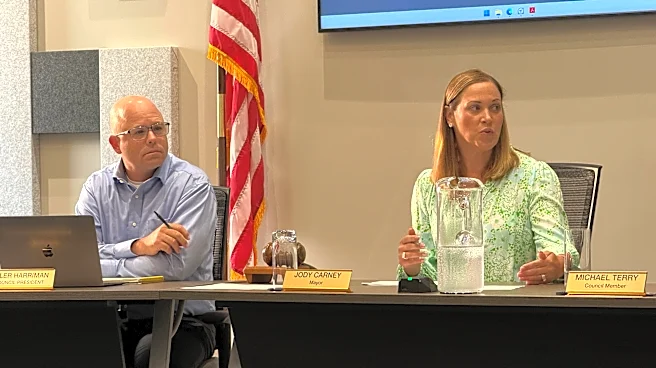
A St. Louis City planning commission meeting concerning proposed regulations for data centers was abruptly thrown into disarray after Don Roe, the executive director of planning and urban design, announced he had received a text message from an unidentified
elected official. The commission had just voted to reject amendments to the data center regulations that were passed by the Board of Aldermen last month. These amendments aimed to loosen restrictions, making it easier to construct large-scale data centers in the city, including waivers for renewable energy requirements and allowing data centers to exceed a 30% building cap. Following Roe's disclosure of the text message, which he said encouraged reconsideration of their rejection, the meeting went into recess rather than adjourning. This leaves the commission's decision without finality and has prompted confusion among members and city officials about the next steps. Mayor Cara Spencer's spokeswoman, Holly Roberts, confirmed that Mayor Spencer did not contact Roe.
Why It's Important?
This incident highlights significant concerns regarding transparency, undue influence, and the integrity of the legislative process within St. Louis city government. The intervention of an unidentified elected official via text message during a critical planning commission vote raises questions about ethical conduct and proper governance. Such actions can undermine public trust in decision-making processes, particularly on issues with substantial economic and environmental implications like data center development. The proposed loosening of regulations for data centers, which are energy-intensive, has implications for the city's sustainability goals and infrastructure. The disarray caused by the text message not only delays a resolution but also creates an environment where decisions appear to be influenced by behind-the-scenes communications rather than open debate and established procedures. This situation could set a problematic precedent for how public policy is shaped in St. Louis, potentially leading to further scrutiny of local government operations.
What's Next?
The St. Louis City Hall is currently scrambling to determine the next course of action following the planning commission's indefinite recess. If the commission's rejection of the amendments holds once the meeting officially adjourns, the proposed changes will return to the Board of Aldermen. There, they will require 10 votes to pass, a higher threshold than the simple majority needed previously. While the amendments initially passed the Board of Aldermen with sufficient votes (12 for renewable energy waivers, 10 for the building cap waiver), the recent events could sway some aldermen. Data center critics are reportedly targeting Alderwoman Daniela Velazquez, a previous "yes" vote, hoping to convince her to reconsider. The outcome will depend on whether the commission's rejection is finalized and if any aldermen change their stance, potentially leading to further debate and a prolonged decision-making process on data center regulations.
Beyond the Headlines
The incident in St. Louis transcends a simple procedural hiccup, touching upon the delicate balance of power between different branches of local government and the potential for informal communications to disrupt formal processes. The anonymity of the elected official's text message creates an environment ripe for speculation and distrust, potentially fueling perceptions of backroom dealings. This situation underscores the importance of clear communication protocols and ethical guidelines for public officials, especially when sensitive policy decisions are at stake. The debate over data center regulations itself reflects broader tensions between economic development and environmental concerns, as cities grapple with attracting tech investment while managing energy consumption and infrastructure demands. The disarray in St. Louis serves as a cautionary tale about how a single, unverified communication can derail public proceedings and erode confidence in democratic institutions, highlighting the need for robust transparency mechanisms in local governance.