





What's Happening?
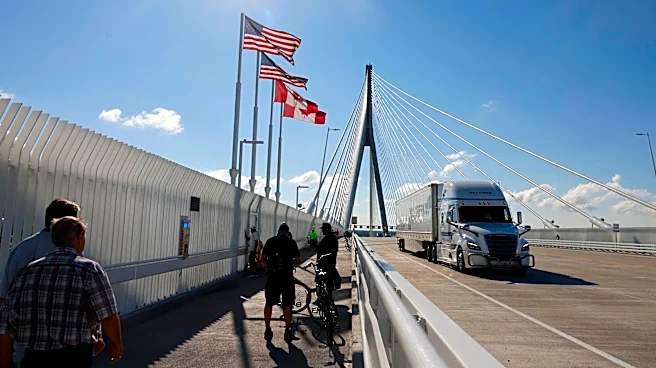
Farmers and agricultural state lawmakers are bracing for the escalating trade war between the U.S. and Canada, which is impacting supply costs and sales. President Trump's administration imposed new 50 percent tariffs on approximately $20 billion worth
of Canadian goods after trade talks failed in late August. Canada retaliated with equivalent import taxes on American goods. Representative Frank Lucas (R-Okla.) voiced significant concern, stating that his district, which produces substantial amounts of beef, hogs, wheat, cotton, oil, and gas, relies heavily on world markets. He acknowledged President Trump's approach as a 'political and economic horse trader' but emphasized the stress these tariffs are causing in his district, expressing a desire for the trade wars to conclude so businesses can operate normally. Congresswoman Kristen McDonald Rivet also criticized the trade war, highlighting its impact on prices for working parents and threats to Michigan jobs and manufacturing.
Why It's Important?
This escalating trade conflict is critically important because it directly threatens the economic stability of U.S. agricultural states and industries. Canada is the second-largest export market for U.S. agricultural goods, purchasing $28 billion last year. The tariffs disrupt highly integrated North American manufacturing, transportation, and input supply chains, affecting farm equipment, replacement parts, and processing facilities. Any sustained increase in costs or disruption to these networks could severely impact farmers already operating with tight margins and elevated input costs. The situation underscores the vulnerability of American industries to trade disputes, particularly those with long-standing, integrated relationships with neighboring countries. The concerns raised by lawmakers like Representative Lucas highlight the real-world economic consequences for their constituents, who face financial strain and uncertainty due to these policy decisions.
What's Next?
President Trump has further escalated economic pressure by banning certain Canadian alcohol, dairy products, and motorcycles from entering the U.S., with these measures set to take effect on September 29. This move indicates a hardening stance in the trade dispute. Republican lawmakers, especially those from border states, are urging the Trump administration to return to negotiations to de-escalate the conflict. The hope is that a resolution can still be achieved despite the growing tensions. The ongoing tariffs and retaliatory measures suggest continued uncertainty for U.S. farmers and manufacturers. Stakeholders will be closely watching for any signs of renewed diplomatic efforts or further escalations, which could have profound and lasting effects on the agricultural sector and broader U.S. economy.
Beyond the Headlines
The U.S.-Canada trade war, as highlighted by Representative Lucas, reveals deeper implications beyond immediate economic impacts. It exposes the delicate balance between political strategy and economic reality, where broad policy decisions can have immediate and severe consequences for specific industries and communities. The reliance on integrated supply chains means that tariffs on seemingly unrelated goods can ripple through various sectors, affecting everything from farm equipment to consumer prices. This situation also underscores the political pressure faced by lawmakers who must balance national trade objectives with the economic well-being of their constituents. The sentiment of 'stress' and the desire for 'all trade wars to be over with' reflect a broader weariness among those directly affected by such disputes, pointing to the human cost of international trade conflicts.