



What's Happening?
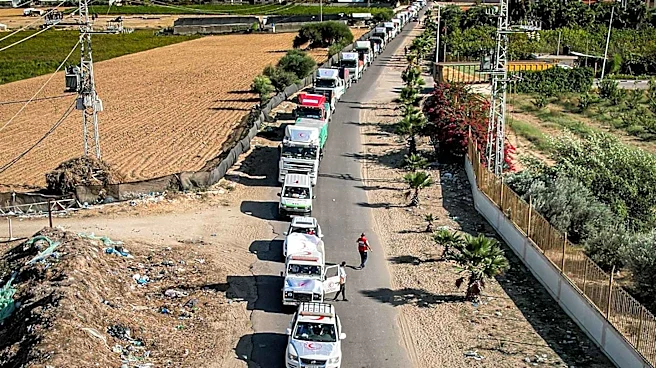
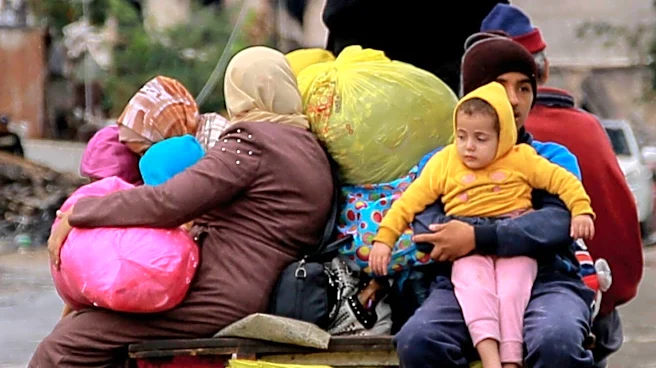
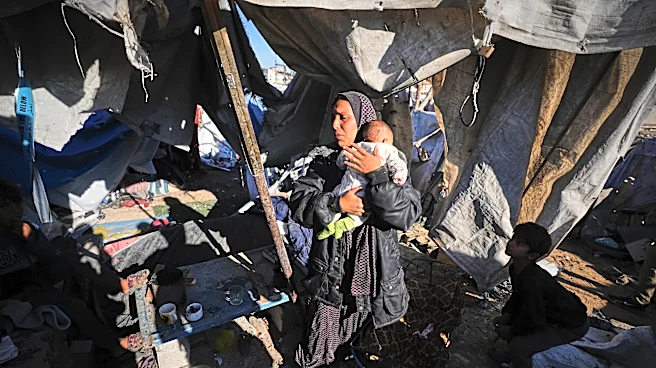
Fifty-three countries and organizations, led by Qatar, Jordan, and the United Kingdom, have collectively urged Israel's incoming government to open Gaza to unrestricted aid. This appeal, delivered at the United Nations headquarters in New York, calls
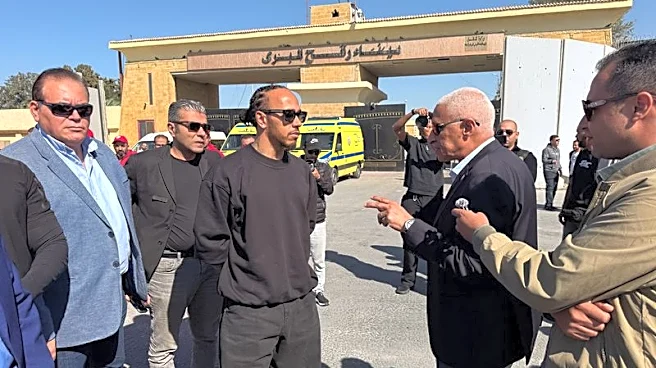
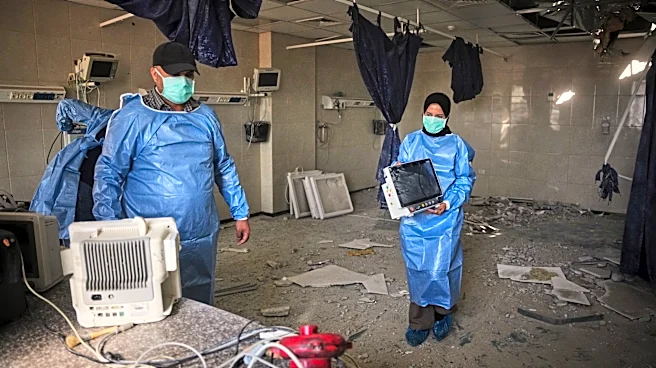
for the full and regular operation of Egyptian and Jordanian humanitarian corridors as winter approaches. The group highlighted that the comprehensive plan endorsed by the UN Security Council under Resolution 2803, which mandates the immediate entry of humanitarian aid at agreed levels, has not been fully implemented. They warned that ongoing restrictions on essential supplies, including shelter and life-saving provisions, are preventing humanitarian organizations from responding adequately. The appeal also called for the restoration of medical referral pathways to hospitals in East Jerusalem and the West Bank and demanded transparent investigations into attacks against healthcare and humanitarian workers.
Why It's Important?
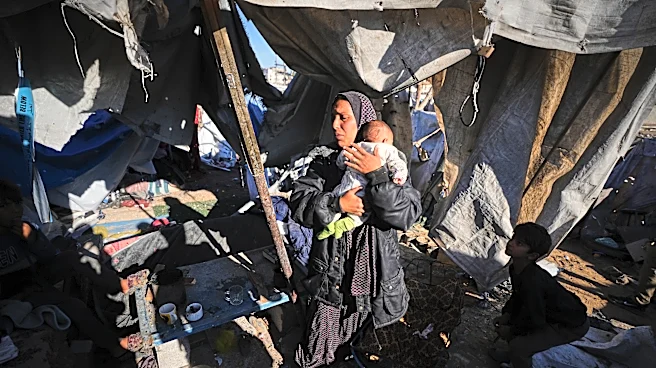
This widespread international demand underscores the critical humanitarian situation in Gaza, exacerbated by the approaching winter. The collective voice of 53 nations, including key regional and global players, signals a significant diplomatic push for immediate action. The inability to provide adequate care within Gaza, coupled with restrictions on aid, poses a severe threat to thousands of injured and sick individuals. The call for transparent investigations into attacks on healthcare and humanitarian workers highlights concerns about adherence to international humanitarian law and the protection of those providing essential services. The failure to implement UN Security Council Resolution 2803, as noted by the group, raises questions about the effectiveness of international mandates and the accountability of parties involved in the conflict.
What's Next?
The immediate focus will be on the response of Israel's incoming government to this urgent appeal. The international community will be closely watching for concrete steps to open all available crossings and land routes for humanitarian aid and to restore medical referral pathways. UN relief chief Tom Fletcher has already criticized delays, stating that waiting for a new government is not an acceptable excuse for holding up aid. As winter conditions worsen, the pressure on all parties to facilitate aid will intensify. Continued non-compliance could lead to further diplomatic actions, increased international scrutiny, and potential calls for stronger enforcement mechanisms to ensure humanitarian access and protection in Gaza.
Beyond the Headlines
The joint appeal by 53 countries reflects a broader international concern for humanitarian principles and the protection of civilians in conflict zones. It highlights the challenges of delivering aid in complex political environments and the critical role of international law in safeguarding vulnerable populations. The call for transparent investigations into attacks on humanitarian personnel and facilities also points to the need for accountability and justice, which are fundamental to upholding the integrity of humanitarian operations. This situation could set precedents for how the international community responds to similar crises in the future, influencing diplomatic strategies and the enforcement of humanitarian mandates globally. The long-term stability of the region is intrinsically linked to addressing these humanitarian concerns effectively.