





What's Happening?
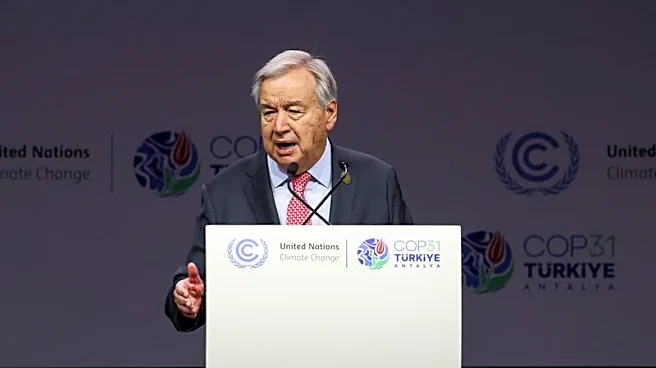
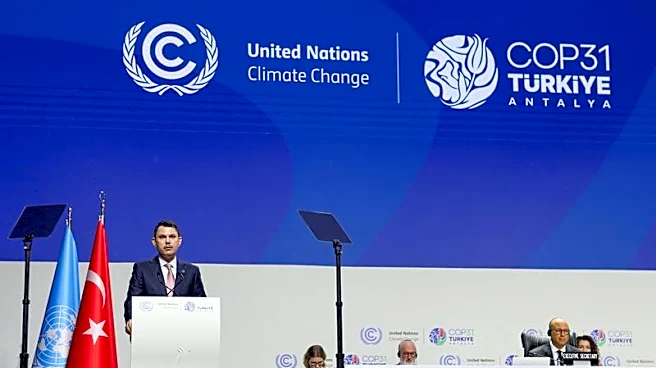
A delegation of California leaders, including Assemblymember Cottie Petrie-Norris and representatives from The Climate Center, will attend COP31 in Antalya, Turkey. This annual United Nations 'conference of the parties' brings together signatories of the United Nations Framework
Convention on Climate Change (UNFCCC) to agree on goals and announce commitments to address the climate crisis. California's participation aims to showcase how state-level policy can drive global progress on climate action, even in the face of differing national agendas. The delegation will also seek to learn from other nations' advancements in climate solutions. The Climate Center will host a webinar to share insights from COP31 participants on California's role as a global leader in climate initiatives.
Why It's Important?
California's proactive engagement at COP31 is significant for the U.S. as it demonstrates how sub-national entities can lead on critical global issues, potentially influencing national policy and international perceptions. By showcasing its ambitious climate targets and successful renewable energy initiatives, California can serve as a model for other states and nations. This participation is particularly important given the varying stances on climate policy at the federal level, illustrating that progress can be made through diverse governmental approaches. For U.S. industries, California's leadership in clean energy and carbon sequestration can drive innovation and investment, creating a competitive edge in emerging green markets. The insights gained from COP31 could also inform future state-level policies, impacting regulations, economic development, and environmental protection across California and potentially inspiring similar actions nationwide.
What's Next?
Following their participation in COP31, the California delegation will share their findings and experiences through a webinar hosted by The Climate Center. This will provide an opportunity for broader engagement and discussion on the lessons learned and their applicability to California's climate strategies. The insights from the conference are expected to inform future state-level policy decisions, particularly in areas such as clean energy, climate targets, and nature-based carbon sequestration solutions. The ongoing dialogue will focus on how California can continue to strengthen its role as a global leader in climate action, potentially influencing other states and contributing to a more cohesive national approach to climate change. The goal is to translate global discussions into actionable local and state-level policies.
Beyond the Headlines
California's presence at COP31 highlights a growing trend where sub-national governments and civil society organizations are stepping up to fill perceived gaps in national climate leadership. This 'multi-level governance' approach to climate change demonstrates that effective action can originate from various political tiers, not solely from federal governments. It also underscores the ethical dimension of climate policy, as states like California commit to ambitious goals driven by a sense of responsibility to future generations and vulnerable communities. This leadership can foster a 'race to the top' among states, encouraging more aggressive climate policies and technological innovation. However, it also raises questions about the coherence of U.S. climate policy when state and federal approaches diverge, potentially creating complexities for businesses and international partners.