






What's Happening?
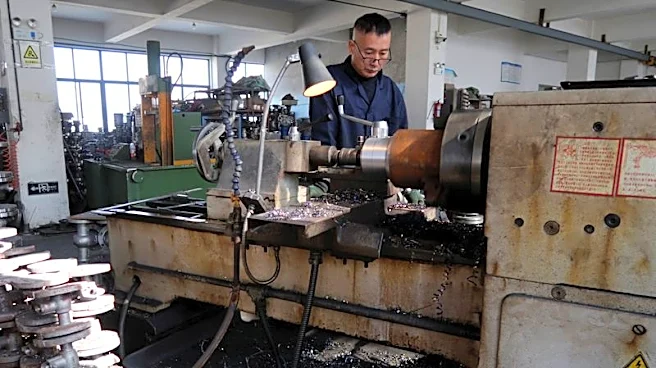
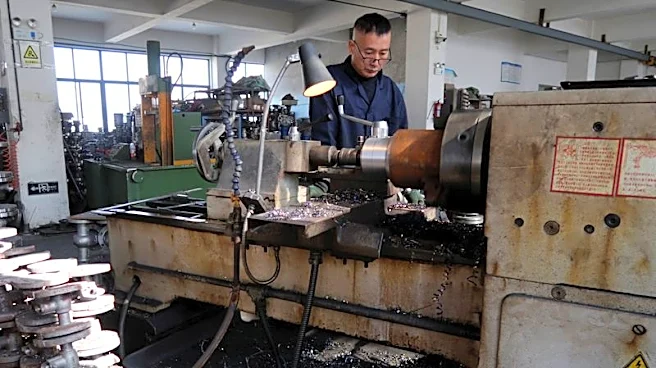
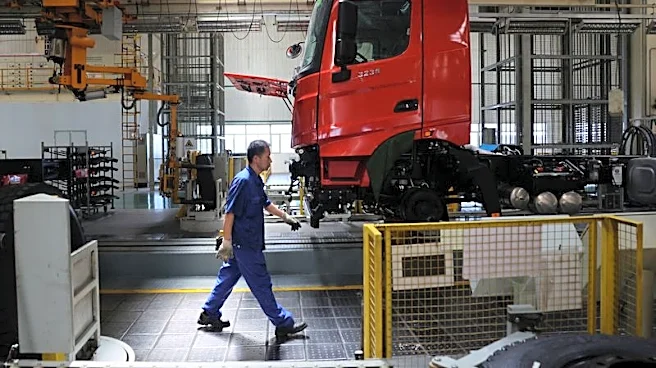
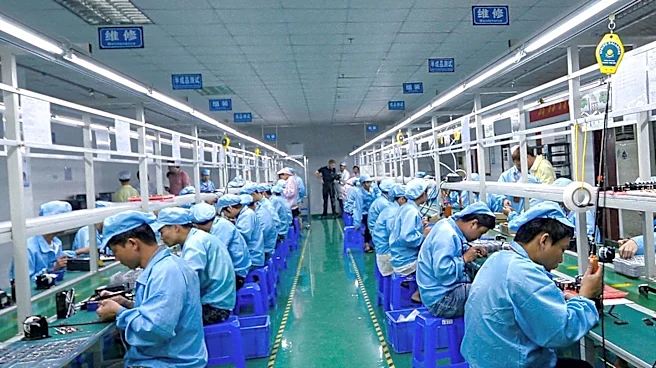
China's manufacturing sector experienced an unexpected contraction in July, marking the first decline since February. The official manufacturing purchasing managers' index (PMI) fell to 49.2 from 50.3 in June, indicating a shift from expansion to contraction.
The decline is attributed to a slump in domestic orders and disruptions caused by typhoons. The contraction ends a four-month period of growth driven by exporters rushing shipments ahead of U.S. tariff increases. The new orders sub-index dropped to its lowest in 38 months, and the construction and services sectors also showed signs of weakness. Despite the downturn, firms remain optimistic about future output, anticipating stronger fiscal policy support.
Why It's Important?
The contraction in China's factory activity has significant implications for global supply chains and economic stability. As a major player in international trade, China's economic performance can influence global markets, including the U.S. The slowdown may affect U.S. businesses reliant on Chinese manufacturing, potentially leading to supply chain disruptions and increased costs. Additionally, the situation underscores the vulnerability of global economies to environmental factors like typhoons, highlighting the need for resilient supply chain strategies. The Chinese government's response to boost domestic demand could also impact international trade dynamics.
What's Next?
China is expected to implement policy measures to stimulate domestic demand and support economic recovery. Local governments may follow through on Beijing's pledges to enhance fiscal support. The effectiveness of these measures will be closely monitored by global markets, as they could influence economic forecasts and trade relations. Businesses and investors will need to adapt to potential changes in supply chain operations and market conditions. The situation may also prompt discussions on diversifying supply sources to mitigate risks associated with reliance on a single market.