



What's Happening?
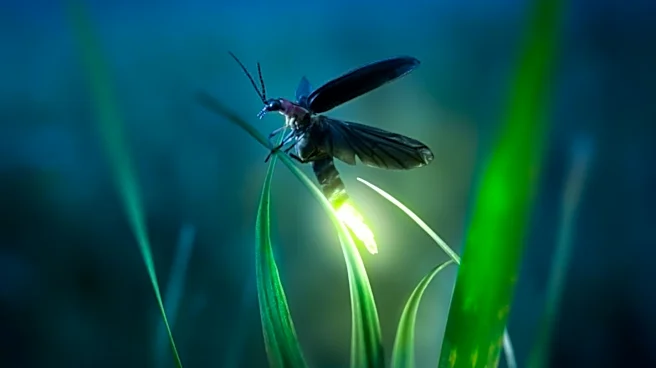
Wayan Wardika, a conservationist in Bali, Indonesia, has launched 'Bring Back the Light,' an initiative aimed at restoring the island's dwindling firefly populations. Wardika, who observed a significant decline in fireflies in his village over 40 years,
started the program in 2020. The initiative focuses on breeding fireflies for release into the wild and promoting habitat protection. Fireflies in Southeast Asia, including Bali, are vanishing due to habitat loss, light pollution, pesticide use, and climate change. Wardika's team of scientists is working to understand and facilitate the firefly breeding process, which is not well-documented in Indonesia. The project also encourages local farmers to adopt organic farming practices, moving away from chemical fertilizers and pesticides that degrade firefly habitats. This effort includes providing farmers with organic alternatives and compensating them for potential losses during the transition.
Why It's Important?
The decline of fireflies in Bali signifies broader ecological issues that have significant implications beyond the island. Fireflies are ecologically and culturally significant; they pollinate local plants and crops, and some species act as natural pest control by feeding on snails that destroy rice plants. Their disappearance indicates an unhealthy ecosystem, as fireflies are highly sensitive to environmental conditions such as air, water, and soil quality. The 'Bring Back the Light' initiative highlights the critical need for sustainable agricultural practices and habitat preservation to maintain biodiversity. The project's focus on encouraging organic farming among local farmers demonstrates a model for how communities can address environmental degradation while supporting local livelihoods. The success of such initiatives can serve as a blueprint for other regions facing similar ecological challenges, emphasizing the interconnectedness of environmental health and human well-being.
What's Next?
Wayan Wardika's initiative aims to expand its reach, with a goal to convince the remaining 35 farmers in his area to adopt organic farming practices, thereby creating a pesticide-free zone for fireflies. The project is funded through ecotourism, including firefly conservation tours, and the sale of organic produce from Wardika's farm. This circular ecosystem model seeks to provide farmers with the necessary materials for organic farming, supporting both their economic stability and the environmental goals of the initiative. The team will continue its painstaking work of breeding and releasing fireflies, while also gathering more knowledge about their breeding process in Indonesia. The long-term success of 'Bring Back the Light' will depend on sustained community engagement, the continued adoption of organic methods by farmers, and the ongoing regeneration of the local ecosystem to ensure a healthy environment for fireflies to thrive.
Beyond the Headlines
The 'Bring Back the Light' initiative in Bali underscores a deeper philosophical shift towards recognizing humanity's interconnectedness with nature. Wardika's personal journey, initially driven by a desire to see fireflies again, has evolved into a broader mission to regenerate the entire ecosystem. This project highlights the ethical responsibility of humans to maintain environmental sustainability not just for current and future generations, but for all biodiversity. The challenge of changing human behavior, particularly convincing farmers to transition from conventional to organic methods, reveals the complex socio-economic dimensions of conservation efforts. By focusing on both ecological restoration and economic incentives for farmers, the initiative addresses the root causes of environmental degradation, demonstrating that conservation can be integrated with sustainable development. This holistic approach suggests that true environmental stewardship requires a transformation in how communities interact with their natural surroundings.