







What's Happening?
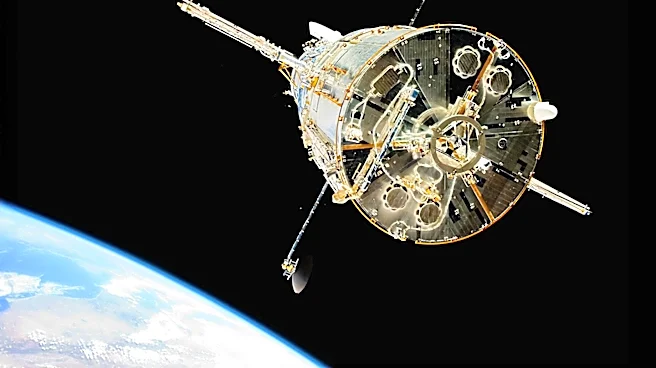
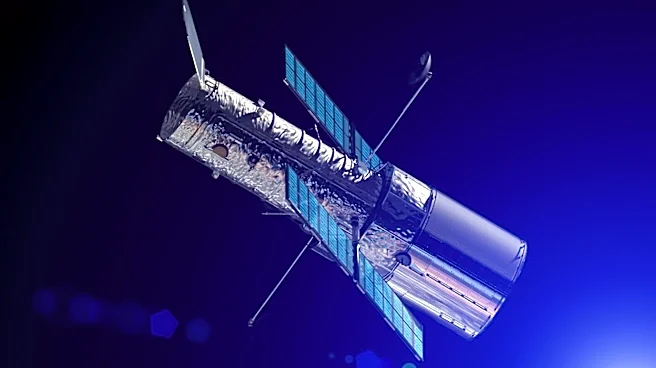
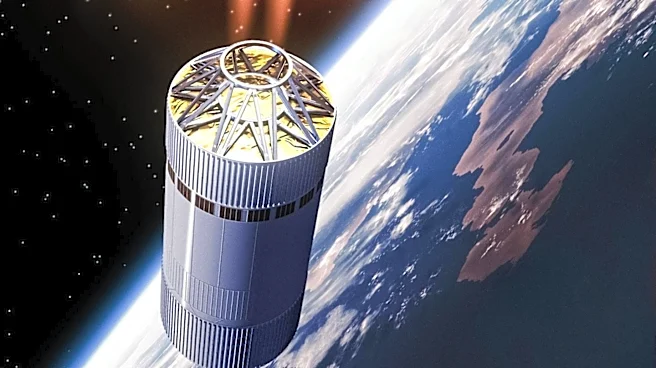
NASA's Neil Gehrels Swift Observatory, an aging satellite launched in 2004, is currently undergoing a rescue mission to prevent its re-entry into Earth's atmosphere. The satellite, which has been instrumental in observing gamma-ray bursts, is experiencing
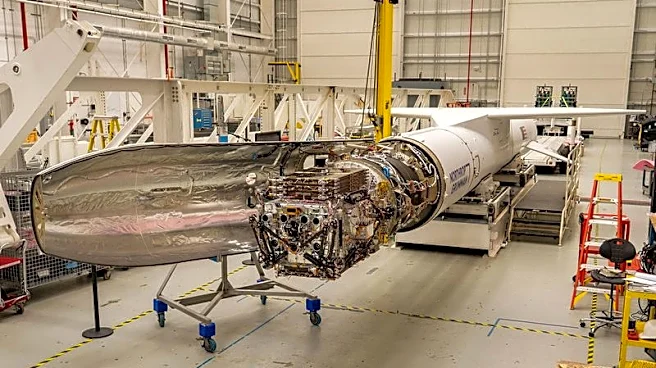
increased atmospheric drag due to heightened solar activity, causing its orbit to descend faster than expected. To address this, NASA awarded a $30 million contract to Katalyst Space Technologies to design and launch a robotic spacecraft named LINK. This spacecraft, launched on July 3, 2026, is tasked with tracking and elevating Swift's orbit. The mission, described as 'space roadside assistance,' involves LINK approaching Swift in orbit to lift it to a higher altitude, ensuring its continued operation.
Why It's Important?
The mission to rescue the Swift satellite is significant for several reasons. Firstly, it highlights the growing need for innovative solutions to manage aging satellites and space debris, which pose risks to both operational satellites and the Earth's surface. The successful elevation of Swift's orbit will extend its operational life, allowing it to continue contributing valuable data on gamma-ray bursts and other astronomical phenomena. This mission also underscores the importance of public-private partnerships in advancing space technology and addressing challenges in satellite maintenance. The involvement of Katalyst Space Technologies demonstrates the potential for private companies to play a crucial role in space operations, potentially leading to more cost-effective and efficient solutions in the future.
What's Next?
Following the successful launch of LINK, the next steps involve the spacecraft approaching Swift and executing the orbit-raising maneuver. If successful, this mission could set a precedent for future satellite maintenance operations, encouraging further investment in space infrastructure and technology. The outcome of this mission will be closely monitored by stakeholders in the space industry, as it could influence future policies and strategies for managing space debris and extending the life of valuable satellites. Additionally, the success of this mission may lead to increased collaboration between NASA and private companies, fostering innovation and development in the space sector.