
What's Happening?
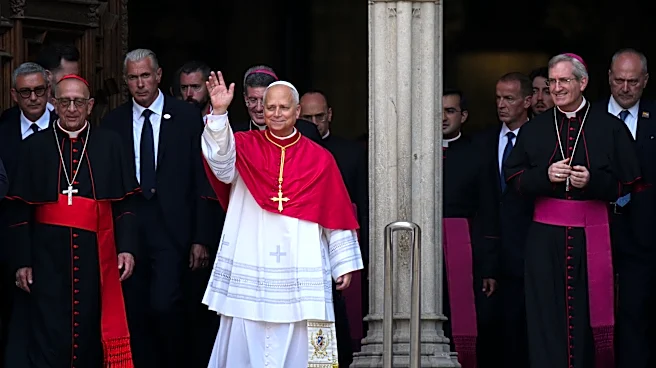
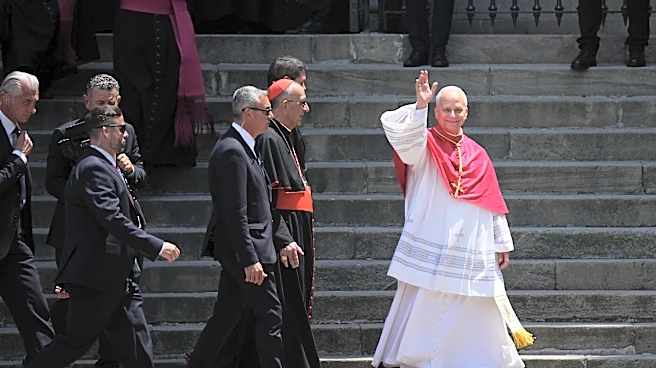
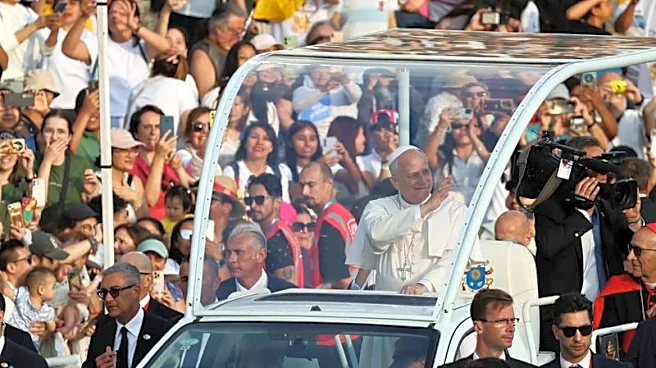
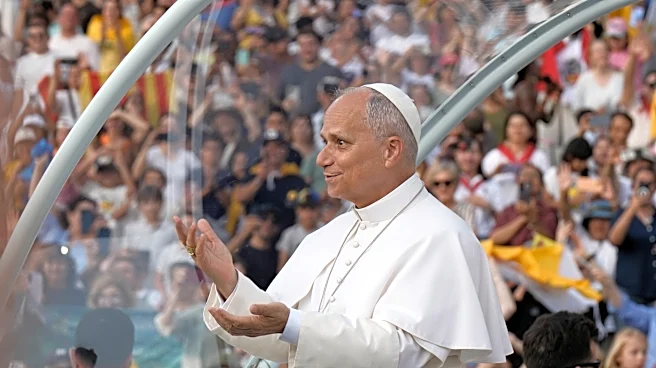
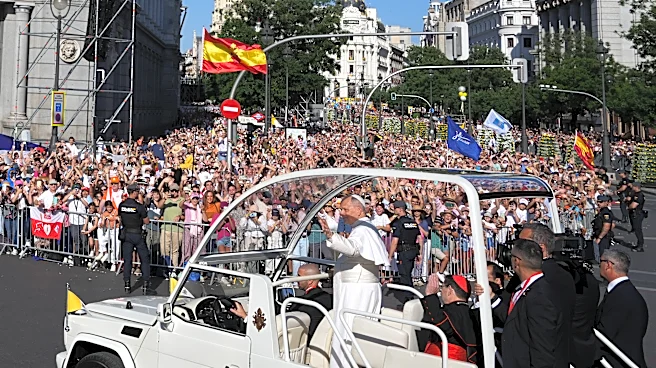
Pope Leo XIV was greeted by the Castellers de Vilafranca, a renowned group of human tower builders, during his visit to Barcelona, Spain. The event took place at the Lluis Companys Olympic Stadium, where
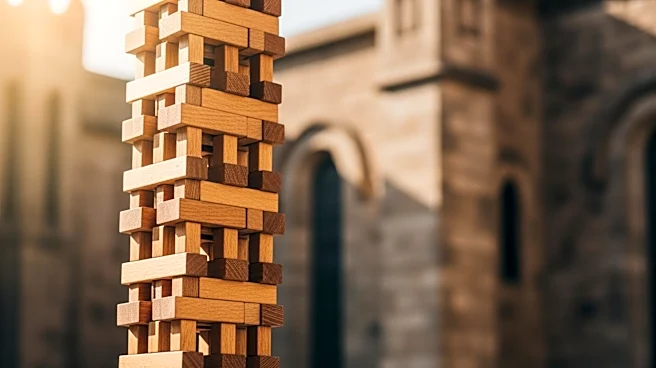
the group performed a 'castell,' a traditional Catalan human tower, as part of a prayer vigil led by the Pope. The human towers, known as 'castells,' are a significant cultural symbol in Catalonia, representing teamwork and community spirit. The performance involved participants of all ages and backgrounds, showcasing the inclusive nature of this tradition. The event was attended by approximately 40,000 people, who cheered as the tower was successfully completed.
Why It's Important?
The event highlights the cultural significance of 'castells' in Catalonia, serving as a symbol of unity and identity for the region. Pope Leo XIV's presence underscores the Vatican's engagement with diverse cultural traditions, promoting inclusivity and dialogue. This visit may strengthen ties between the Catholic Church and the Catalan community, fostering mutual respect and understanding. The performance also draws international attention to Catalonia's rich cultural heritage, potentially boosting tourism and cultural exchange.
What's Next?
Following the successful event, there may be increased interest in Catalan traditions, both locally and internationally. The Vatican's engagement with diverse cultures could lead to further initiatives promoting cultural understanding. For the Castellers de Vilafranca, this high-profile performance may open opportunities for more international showcases, enhancing their global recognition. The event could also inspire other cultural groups to seek similar platforms for showcasing their traditions.
Beyond the Headlines
The inclusion of diverse participants in the 'castell' performance reflects broader societal values of inclusivity and cooperation. This event may encourage other regions to celebrate and preserve their cultural traditions, recognizing their role in fostering community identity. Additionally, the Vatican's involvement in such cultural events may signal a shift towards a more open and inclusive approach to global cultural engagement.