



What's Happening?
Katalyst Space Technologies has successfully reduced the spin rate of its Link servicing spacecraft from 9 degrees per second to 1.47 degrees per second using an electric thruster. This achievement was accomplished with less than 100 grams of fuel. The
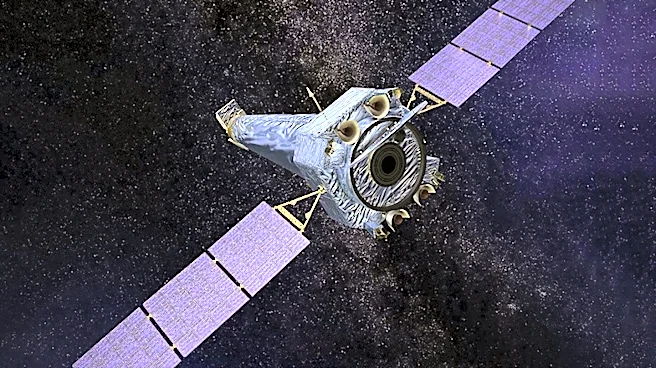
spacecraft had entered a multi-axis spin during post-launch commissioning, and the company plans to upload a flight software update to restore full attitude control. The mission aims to reach NASA's Neil Gehrels Swift Observatory to raise its decaying orbit.
Why It's Important?
The successful recovery of the Link spacecraft demonstrates the potential for in-orbit servicing and repair of satellites, which can extend their operational lifespans and reduce space debris. This capability is crucial for maintaining and enhancing the functionality of existing space assets, supporting the growing demand for satellite services. The mission also highlights the importance of developing reliable and efficient spacecraft control systems.
What's Next?
If the recovery efforts continue to succeed, the Link spacecraft will attempt to grapple the Swift Observatory in late August. This mission could pave the way for future in-orbit servicing missions, potentially transforming satellite maintenance and operations. The success of this mission could encourage further investment and innovation in the field of space servicing technologies.