








What's Happening?
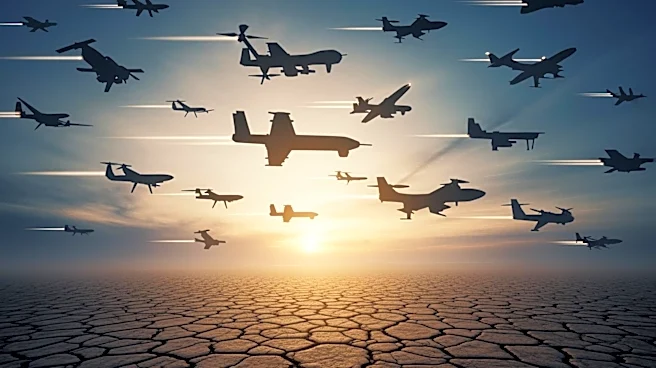
Most Gulf stock markets experienced declines on Sunday following a new escalation in tensions between the United States and Iran. The US military conducted strikes on Iranian coastal radar installations after intercepting drones launched by Iran towards
the Strait of Hormuz. This military action has contributed to a sense of uncertainty in the region, affecting market performance. Saudi Arabia's benchmark index fell by 0.6%, with significant declines in the Saudi Arabian Mining Company and Saudi Aramco. Similarly, Qatar's index decreased by 0.3%, with Qatar National Bank, the largest lender in the Gulf, retreating by 1.2%. The situation has also influenced oil prices, with Brent crude futures settling at $93.09 per barrel, a 2% decrease, as traders reacted to the potential for renewed conflict.
Why It's Important?
The recent military actions and subsequent market reactions highlight the fragile nature of geopolitical stability in the Gulf region. The Strait of Hormuz is a critical chokepoint for global oil shipments, and any disruption can have significant implications for global energy markets. The decline in stock markets reflects investor concerns about the potential for prolonged conflict, which could impact economic growth and stability in the region. Companies like Saudi Aramco and Qatar National Bank are key players in the Gulf economy, and their performance is closely watched by international investors. The situation underscores the interconnectedness of geopolitical events and financial markets, with potential ripple effects on global trade and energy supplies.
What's Next?
The ongoing tensions between the US and Iran are likely to continue influencing market dynamics in the Gulf. Investors will be closely monitoring any further military developments or diplomatic efforts to de-escalate the situation. The response from major stakeholders, including regional governments and international organizations, will be crucial in determining the future stability of the region. Additionally, fluctuations in oil prices will remain a key factor, as they directly impact the economies of Gulf countries. The potential for further market volatility remains high, and stakeholders will need to navigate these uncertainties carefully.