






What's Happening?
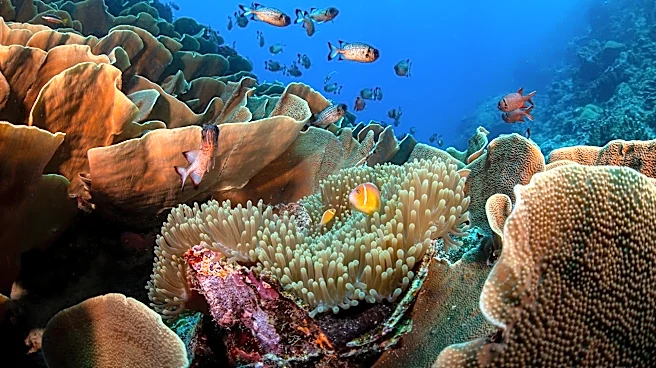
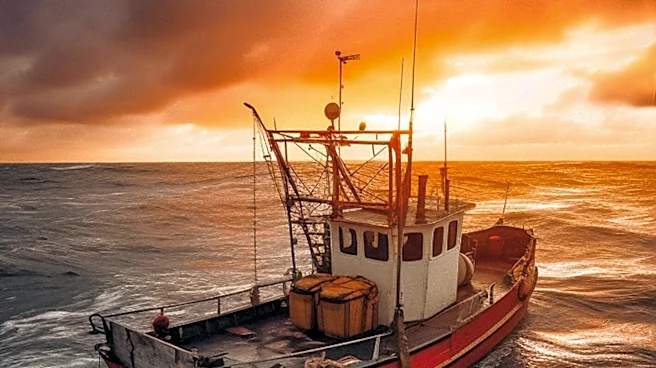
A recent study by the Zoological Society of London (ZSL) has revealed that bomb fishing, a destructive practice banned since 2004, is occurring at an alarming rate in the Spermonde Archipelago, a wildlife hotspot in the Indo-Pacific Ocean. Researchers
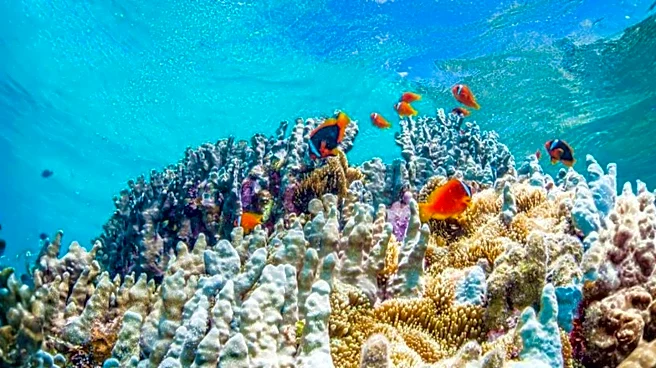
placed microphones on coral reefs and recorded nearly one bomb explosion every hour over a 16-month period. This equates to approximately 3,570 instances of bomb fishing, resulting in the degradation of 160,000 square meters of coral reefs. The study, led by Ben Williams at ZSL's Institute of Zoology and UCL, found significant differences in the soundscapes of healthy reefs compared to those damaged by bomb fishing, with the vibrant sounds of fish communities being absent in degraded areas. Professor Jamaluddin Jompa of Hasanuddin University, a co-author, stated that bomb fishing is considered the leading cause of reef loss in the Spermonde Archipelago.
Why It's Important?
The continued prevalence of bomb fishing has severe ecological and economic consequences. Ecologically, it devastates coral reefs, which are vital marine ecosystems supporting a vast array of biodiversity and providing critical services such as coastal protection and fish nurseries. The creation of 'rubble fields' by explosives prevents rapid regeneration, leading to long-term damage that outpaces restoration efforts. Economically, the destruction of reefs impacts local fishing communities that rely on healthy marine environments for their livelihoods, potentially leading to food insecurity and economic instability. The study's findings highlight a significant enforcement gap in international and national regulations designed to protect marine environments. The scale of destruction, capable of destroying an area the size of the Vatican City in just three years, underscores the urgent need for more effective conservation strategies and community engagement to develop sustainable fishing alternatives.
What's Next?
The research team hopes that their study will be instrumental in identifying hotspots where bomb fishing is most prevalent. This data can then be used by conservationists to collaborate with local communities, aiming to develop and implement alternative, sustainable fishing solutions. Furthermore, the findings are expected to bolster efforts to enforce existing regulations more effectively. The use of technology, such as acoustic monitoring, offers a promising avenue for rapid and efficient action against illegal fishing practices. Future steps will likely involve increased monitoring, community outreach programs to educate on the long-term impacts of bomb fishing, and the provision of economic incentives for adopting environmentally friendly fishing methods. International cooperation will also be crucial in addressing this transnational environmental crime and protecting shared marine resources.
Beyond the Headlines
The persistence of bomb fishing, despite its illegality and known destructive impact, points to deeper socio-economic issues such as poverty, lack of alternative livelihoods, and insufficient enforcement capacity in certain regions. This practice is not merely an environmental problem but a complex challenge rooted in human behavior and economic pressures. The 'silent' destruction of underwater ecosystems, as evidenced by the altered soundscapes, highlights how human activities can profoundly change natural environments in ways that are not immediately visible. The ethical implications extend to the responsibility of global communities to support sustainable development in vulnerable regions, ensuring that economic needs do not come at the cost of irreversible environmental damage. Addressing bomb fishing effectively requires a holistic approach that combines scientific monitoring, legal enforcement, and socio-economic development to foster a sustainable relationship between human communities and marine ecosystems.